
Cassiope mertensiana
Cassiope mertensiana
Description
Growing requirements
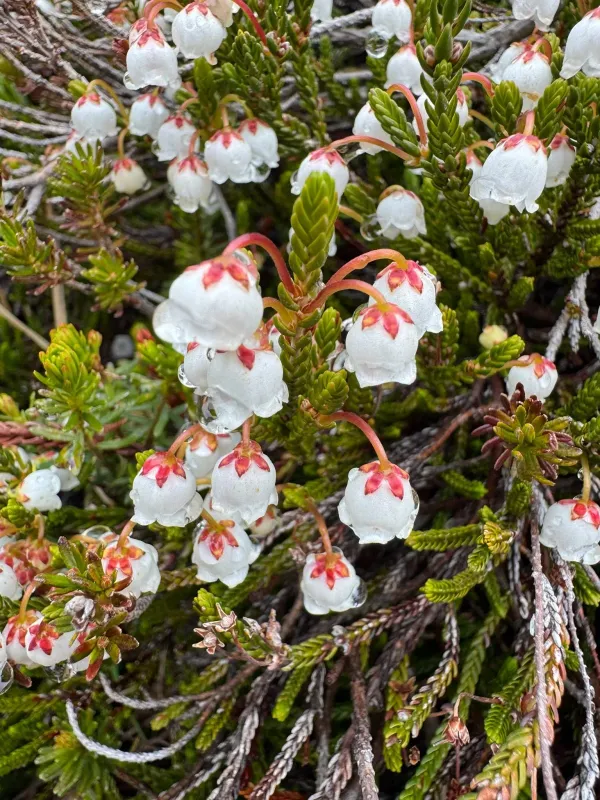
Cassiope mertensiana, commonly known as the white mountain heather, is a low-growing perennial shrub belonging to the Ericaceae family, native to the western mountains of North America.
This species is highly adapted to subalpine and alpine environments, thriving in cool, humid climates with well-drained, acidic, and organic-rich soils.
Successful cultivation requires a location with bright light but protection from intense afternoon sun, which can cause significant stress to the foliage.
The soil should ideally mimic a rocky, boggy alpine slope, requiring high amounts of peat moss and grit to ensure moisture retention coupled with excellent drainage.
Consistent environmental conditions are key; the plant does not tolerate sudden temperature spikes or dry winds, making it ideal for specific rock garden microclimates.
Main diseases and pests
The primary agronomic challenge with this species is managing root rot caused by poor soil drainage and stagnant water around the root zone.
Leaf spot and other fungal pathogens can establish themselves during prolonged periods of high humidity and poor air circulation within the dense foliage mats.
Pests such as spider mites may become problematic during periods of moisture stress or heat waves, necessitating careful monitoring and potential intervention.
Preventative care involves ensuring the plant is never waterlogged and applying a top dressing of gravel to keep the collar of the plant dry.
Maintaining optimal soil acidity is essential, as elevated pH levels will quickly lead to chlorosis and decreased vigor in the plants, making them susceptible to secondary infections.