
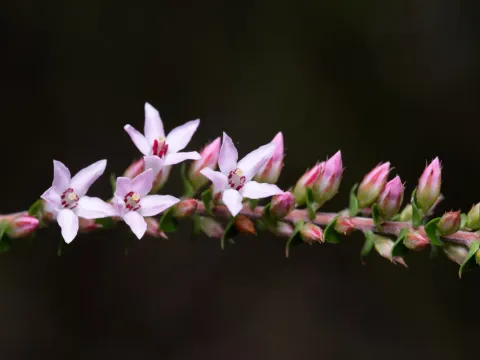
Epacris pulchella
Epacris pulchella
Epacris pulchella is an elegant shrub belonging to the Ericaceae family, widely known for its delicate aesthetic and persistent greenery. It is a classic representative of Australian native flora, adapted to specific ecological niches.
What the section contains
Epacris pulchella
The natural habitat of this plant includes sandstone-based heathlands where soils are characteristically low in nutrients and highly acidic. Successful cultivation requires a substrate that mimics these harsh but well-drained conditions.
Essential soil requirements include excellent drainage properties to prevent the root system from suffocating. It is highly recommended to use a mix composed of sand, peat, and organic matter suitable for acid-loving ericaceous plants.
Climatic conditions for Epacris pulchella should be stable, favoring moderate temperatures and significant air humidity. The plant thrives in locations that offer dappled light, shielding it from intense midday heat which can scorch its leaves.
Maintenance involves precise watering techniques; the plant demands soft water, as lime-rich water will drastically alter the soil pH and lead to long-term health issues. Regular, light pruning after the flowering season encourages a denser growth habit.
The most significant threat to Epacris pulchella is root rot caused by Phytophthora species. This condition arises almost exclusively when the soil remains waterlogged for extended periods, destroying the fine root hairs.
Pests such as spider mites may become problematic during dry, hot spells. Vigilant inspection of the leaf underside is necessary to detect infestation before significant damage occurs to the foliage.
Fungal leaf spots can occur if air circulation is insufficient. Ensuring that the shrub is not crowded by other plants is a fundamental preventative measure against various fungal pathogens.
Nutrient toxicity, often caused by heavy use of standard fertilizers, can prove lethal. Epacris pulchella is adapted to low-nutrient environments, so any fertilizer application must be extremely diluted and specific to phosphorus-sensitive plants.
Environmental stress, including frost or extreme wind exposure, can weaken the plant, making it more susceptible to opportunistic secondary infections. Proper site selection is the best defense against both climatic stress and biotic threats.