
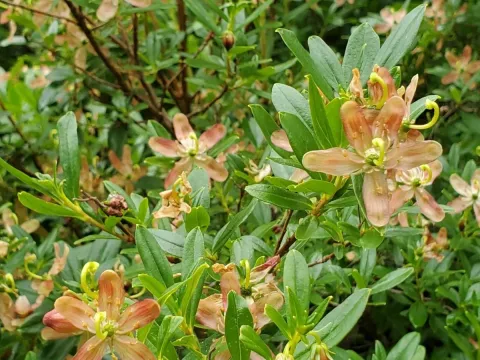
Elliottia
Elliottia
Elliottia is a rare genus of flowering plants belonging to the Ericaceae family. Known for its elegant clusters of white flowers, this plant is highly prized among botanical enthusiasts for its unique aesthetic and limited distribution in its native North American habitat.
What the section contains


Elliottia
Successful cultivation of Elliottia depends heavily on mimicking its native woodland environment. The plants require acidic, well-draining soil that is rich in organic matter. A mixture of pine bark, peat moss, and sand is often recommended to ensure the roots have access to both air and moisture.
The plant thrives in partial shade conditions, as excessive direct sunlight can scorch the foliage and dry out the shallow root system. It is best placed in areas protected from strong, drying winds, ensuring a stable microclimate throughout the growing season.
Consistent soil moisture is essential for Elliottia. While the soil should never be waterlogged, it must not be allowed to dry out completely. Applying a layer of pine needle or bark mulch is a standard practice to regulate ground temperature and moisture levels effectively.
Maintenance involves providing adequate space for the plant to grow, as Elliottia generally dislikes root disturbance. Once established in a site that meets its strict soil and light requirements, the plant can remain in the same location for many years, slowly reaching its maturity.
Root rot, primarily caused by Phytophthora species, is the most significant threat to the health of Elliottia. These pathogens thrive in poorly drained, saturated soils, quickly damaging the root system and often leading to the sudden decline of the entire specimen.
Foliar diseases, such as leaf spot or rust, can occur if humidity levels are excessively high or if the foliage remains wet for extended periods. Proper air circulation and avoiding overhead irrigation can significantly reduce the risk of these common fungal infections.
Pests such as spider mites are problematic during dry summer months. These tiny pests feed on the undersides of the leaves, resulting in stippling and general yellowing, which significantly impacts the plant's vigor if left untreated for a prolonged period.
Scale insects can attach themselves to the stems and branches of the shrub. By extracting vital nutrients from the plant, they weaken it over time and often produce honeydew, which attracts secondary issues like sooty mold, further hindering the plant's health.
Integrated pest management, including regular inspection and the use of targeted horticultural oils or soaps, is the recommended approach. Careful observation during the active growing season allows for early intervention before pest populations become difficult to control.