
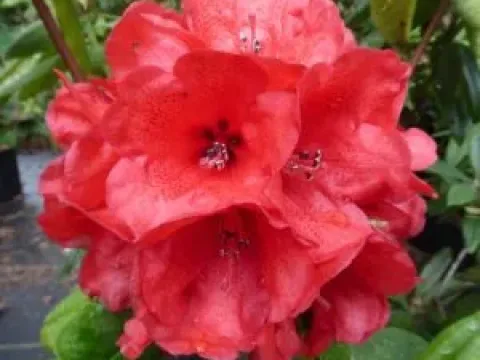
Elliott's rhododendron
Rhododendron elliottii
Elliott's rhododendron (Rhododendron elliottii) is an evergreen shrub belonging to the Ericaceae family. It originates from the high-altitude areas of Manipur, India, where it thrives in moist, temperate mountain environments.
What the section contains
Elliott's rhododendron
The plant is known for its robust growth habit, reaching up to 3 meters in height. It features large, leathery deep green leaves and striking trusses of vibrant scarlet or crimson flowers, often marked with distinctive dark spots.
Regarding soil requirements, this species demands highly acidic, porous, and humus-rich growing media. It is essential that the soil structure provides excellent drainage while maintaining consistent moisture, as the shallow root system is highly intolerant of drought or standing water.
Climate needs are quite specific: this rhododendron prefers cool, sheltered locations with high air humidity and protection from harsh midday sun. In cooler zones, it requires protection against frost during the winter to safeguard the floral buds.
In landscaping, it is used as a premium ornamental specimen. Due to its slow growth and specific environmental requirements, it is often found in botanical collections and specialized gardens where microclimate control is possible.
Common pathological issues include Phytophthora root rot and various leaf spot diseases, which are exacerbated by poor air circulation and excessive moisture in the root zone.
Key insect pests include rhododendron bugs and spider mites, which pierce the foliage to feed, causing chlorosis, wilting, and premature leaf drop if infestations are not controlled.
Integrated pest management involves strict adherence to cultural practices, such as maintaining correct soil pH and ensuring the plant is not subjected to mechanical stress or improper watering.
Chemical control is required if threshold levels of pests are detected. Regular inspection of the undersides of the leaves is critical for the early detection of mites and insects.
Good garden hygiene, including the removal of leaf litter under the plant and thinning out dense branches, significantly reduces the pressure from fungal diseases and airborne spores.