
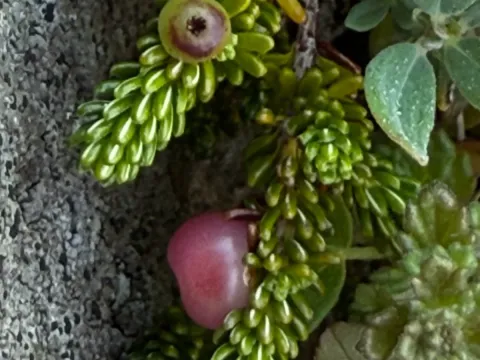
Empetrum eamesii
Empetrum eamesii
Empetrum eamesii, commonly known as a type of rockberry, is a dwarf evergreen shrub belonging to the Ericaceae family. It is recognized for its creeping habit and hardiness, making it a distinctive species in arctic and subarctic ecosystems.
What the section contains
Empetrum eamesii
The native habitat of this plant includes the rugged, rocky landscapes of North America, particularly in regions like Newfoundland and Greenland. It is adapted to cold environments where nutrient levels are low and environmental stressors are high.
Cultivation requirements necessitate a highly acidic soil environment with a pH typically ranging between 4.5 and 5.5. A well-draining substrate is mandatory, as the plant is susceptible to root rot if water lingers around the root zone for too long.
Regarding climate, the plant thrives in cool, windy conditions and is extremely cold-tolerant. It requires a period of winter dormancy to complete its biological cycle successfully and performs poorly in climates with consistently hot, humid summers.
Economic and practical uses include the collection of its edible berries, which have been historically consumed by indigenous populations. Furthermore, its evergreen foliage makes it a low-maintenance choice for ground cover in specialized rock gardens.
The primary threats to Empetrum eamesii involve fungal infections, which are frequently triggered by poor air circulation and excessive moisture in the root zone or foliage.
While the plant is naturally resistant to many pests due to its tough, leathery leaves and chemical composition, over-fertilization can weaken the plant and make it more vulnerable to opportunistic pathogens.
Environmental stress, particularly sudden thaw-freeze cycles, can cause significant damage to the plant's buds, reducing the potential yield for the following growing season.
Maintaining proper soil texture is crucial; compacting the soil or adding inappropriate amendments can suffocate the roots and lead to decline in plant vigor.
Effective management strategies include planting in raised beds with sandy, acidic soil mixtures and ensuring that the site receives ample direct sunlight to inhibit fungal growth.