
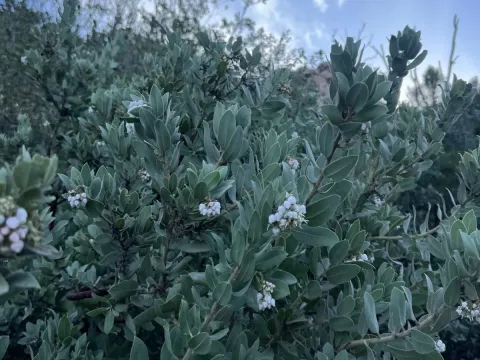
Eastwood manzanita
Arctostaphylos glandulosa
Eastwood manzanita (Arctostaphylos glandulosa) is a prominent member of the Ericaceae family. Native to the chaparral regions of California and northern Mexico, this evergreen shrub is highly adapted to Mediterranean-style climates.
What the section contains
Eastwood manzanita
The plant thrives in well-draining, rocky or sandy soils. It is particularly noted for its ability to grow in nutrient-poor substrates, making it an excellent candidate for low-input cultivation in specific ecological zones.
Cultivation requirements include full sun exposure and excellent aeration of the soil. As a drought-tolerant species, it requires minimal irrigation once established and can suffer damage from waterlogged soil conditions.
Botanically, Arctostaphylos glandulosa is distinguished by its glandular-pubescent stems and foliage. Its rigid, leathery leaves are an adaptation to prevent transpiration, ensuring survival during hot and dry summer months.
The plant demonstrates significant resilience to fire, as it regenerates from a specialized structure known as a lignotuber located at the base of the stem. This adaptation ensures the species' longevity in its native habitat.
The primary agricultural interest in this species lies in its chemical composition, specifically the presence of arbutin in its foliage, which is sought after for therapeutic applications. The leaves are carefully harvested during the peak vegetation phase.
Post-harvest processing is critical for maintaining the potency of the medicinal components. The leaves must be dried in controlled environments to prevent the degradation of active chemical compounds.
- Avoid heavy fertilization during growth stages.
- Maintain a consistent pH range suitable for Ericaceous plants.
- Ensure adequate spacing to promote air circulation.
Beyond its pharmaceutical value, Eastwood manzanita serves as an essential tool in land management and soil conservation. Its deep, anchoring roots make it effective at stabilizing slopes and preventing soil erosion.
The plant also supports local biodiversity, functioning as a vital nectar source for native pollinators and a food supply for various avian and mammalian species within its ecosystem.