
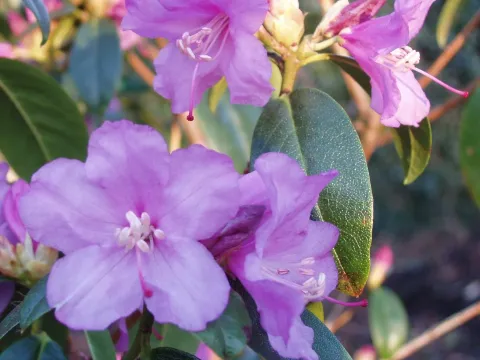
Early Rhododendron
Rhododendron praecox
Early Rhododendron (Rhododendron praecox) is a hybrid evergreen shrub belonging to the Ericaceae family. It is widely recognized for its exceptionally early flowering period, making it a prized ornamental plant for spring landscapes.
What the section contains
Early Rhododendron
This species thrives in locations with partial shade and protection from harsh, drying winds. It requires a well-draining, highly acidic soil environment to support its delicate and sensitive root system.
Maintaining a consistent moisture level in the root zone is crucial. The soil should be amended with organic matter like peat moss or coniferous needles to maintain the low pH levels essential for nutrient uptake.
Exposure to direct hot sunlight during the afternoon should be avoided to prevent leaf scorching. Planting near taller trees that provide dappled shade mimics its natural forest-edge habitat.
Regular mulching is highly recommended to regulate soil temperature and prevent weeds. Never use lime or other alkaline amendments, as they will quickly cause severe chlorosis in the foliage.
Common health issues include phytophthora root rot and leaf spot diseases. These are usually triggered by poor drainage or overly compacted soil conditions that trap excess water near the roots.
Pests such as rhododendron bugs, spider mites, and vine weevils can cause significant damage. These insects weaken the plant by feeding on the leaves, which can lead to stunted growth if left unmanaged.
- Implement proper spacing during planting to improve air circulation and reduce disease pressure.
- Regularly monitor the foliage for early signs of insect activity to apply localized control measures.
- Use systemic fungicides or insecticides strictly as recommended to ensure plant safety and effectiveness.
Nutrient deficiencies, particularly iron or magnesium, are often misdiagnosed as disease. Ensuring the correct acidity level usually allows the plant to absorb nutrients efficiently from the soil.
Winter hardiness varies, but the plant generally benefits from a layer of mulch and protection from winter winds to keep the root system healthy and productive for the next flowering cycle.