
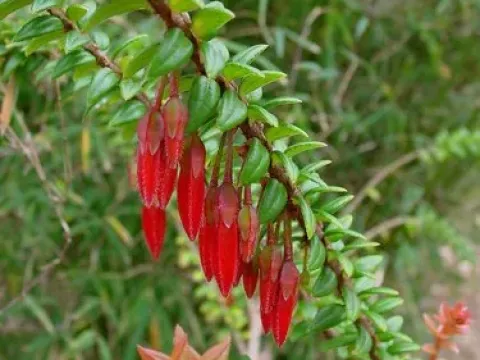
Agapetes rugosa
Agapetes rugosa
Agapetes rugosa is a distinguished epiphytic shrub belonging to the Ericaceae family, native to the mountainous regions of the Himalayas. Its unique morphological structure makes it a highly sought-after plant for specialized greenhouse and indoor collections around the world.
What the section contains
Agapetes rugosa
The culture thrives in a well-draining, acidic, and porous substrate, typically composed of orchid bark, peat moss, and perlite. This mixture mimics the natural environment of the plant, allowing its fine, delicate root system to access oxygen and moisture without becoming waterlogged.
Agapetes rugosa prefers cool to temperate climatic conditions, with ideal temperatures ranging between 15 and 22 degrees Celsius. It is highly sensitive to extreme heat and cold, requiring stable conditions to maintain its lush foliage and produce its signature tubular flowers.
Regarding light, the plant performs best in bright, indirect light. Direct exposure to intense midday sun is detrimental, as it causes leaf scorch, while insufficient light levels will inhibit flowering and cause the plant to become leggy.
High humidity is essential for the healthy development of this species. Growers should maintain ambient humidity levels of at least 60% through regular misting, the use of humidity trays, or automated greenhouse misting systems.
The primary pests affecting Agapetes rugosa include spider mites, which are particularly active in low-humidity environments, and mealybugs, which tend to congregate in the protected junctions where leaves meet the stems.
Root rot is the most common physiological threat, often caused by inadequate drainage or over-watering, which deprives the roots of oxygen and encourages the proliferation of soil-borne pathogens.
Leaf spot diseases can emerge if air circulation is insufficient. Ensuring proper spacing and keeping the foliage relatively dry during the night helps significantly reduce the incidence of fungal infections.
Scale insects may occasionally infest the stems, requiring manual removal with a cotton swab dipped in isopropyl alcohol or targeted applications of systemic insecticides suited for acid-loving plants.
Regular monitoring of the undersides of the leaves is advised as a preventative measure, as early detection of pests allows for more effective control before a major infestation occurs.