
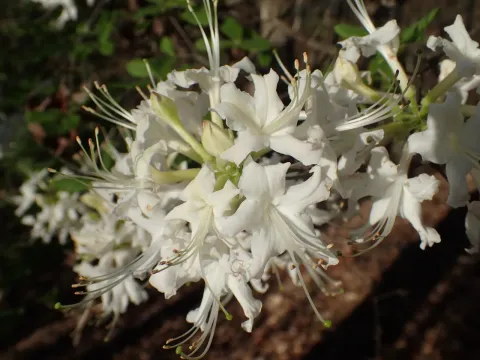
Alabama azalea
Rhododendron alabamense
The Alabama azalea (Rhododendron alabamense) is a distinguished deciduous shrub belonging to the Ericaceae family. It is native to the southeastern United States, primarily found in the forests and mountainous regions of Alabama, noted for its distinctively fragrant white or pink-tinted flowers.
What the section contains
Alabama azalea
Successful cultivation of this species requires a specific soil composition. It thrives in well-draining, acidic soils rich in organic matter. A sandy or loamy soil texture that prevents water logging is essential for the healthy development of its delicate, shallow root system.
Regarding climate, the plant requires a spot in partial shade or dappled sunlight. Protection from intense afternoon heat is necessary to maintain the moisture levels within the foliage and prevent the drying out of the floral buds during the critical pre-blooming period.
Agricultural management includes consistent mulching, which mimics the natural leaf litter of its native forest environment. This layer helps regulate soil temperature, suppress weeds, and retain the constant moisture levels that the Alabama azalea strictly demands.
Host-plant utility for this species is largely decorative. It is highly sought after by landscape designers for inclusion in native plant collections, fragrant gardens, and woodland borders where its unique scent and early spring blossoms add significant value to the landscape.
The primary threats to Rhododendron alabamense involve fungal diseases, with root rot being the most lethal. This condition typically arises in poorly drained soils where the environment favors the growth of harmful microorganisms that degrade the roots.
Insect pests such as lace bugs are common nuisances that cause yellowing of the leaves by piercing plant tissues. If left untreated, these infestations can severely weaken the shrub's photosynthetic capacity and stunt its overall growth.
Leaf spot pathogens can also affect the foliage during periods of high humidity and poor ventilation. Proper site selection and spacing between plants are the most effective cultural controls to mitigate these risks naturally.
The shrub is also susceptible to scale insects which attach themselves to the stems and branches. Regular monitoring and physical removal or targeted organic horticultural oils can help manage these populations without causing long-term damage.
Maintenance schedules should include regular pruning of dead or diseased wood to promote better air circulation and sunlight penetration, which act as primary defenses against most common biological threats to this plant.