
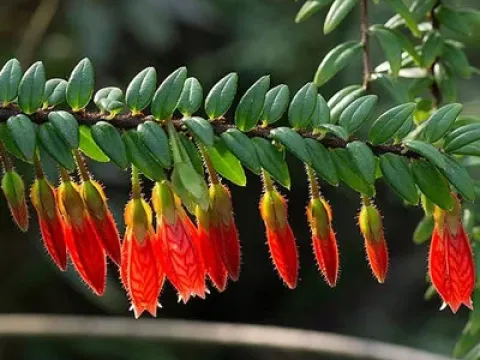
Agapetes discolor
Agapetes discolor
Agapetes discolor is an evergreen shrub belonging to the Ericaceae family. Originating from the Himalayan regions and Southeast Asia, this species often grows as an epiphyte, colonizing trees or rocky crevices in humid, high-altitude mountain forests.
What the section contains
Agapetes discolor
To successfully cultivate Agapetes, one must replicate its natural environment. It prefers cool to moderate temperatures ranging between 18°C and 24°C and thrives in areas with bright, indirect light. Direct sun exposure can scorch the delicate foliage and damage the plant.
The substrate is a critical factor for success. As a member of the heath family, it requires a well-draining, highly acidic soil mix. A combination of peat moss, perlite, and coniferous bark is ideal to ensure proper aeration and moisture retention without waterlogging.
Humidity management is vital for the health of this shrub. It requires a humid environment, ideally kept at 70% relative humidity. Regular misting or the use of humidifiers in greenhouse settings will help maintain the plant's vigor and promote healthy growth cycles.
In terms of agricultural and horticultural use, Agapetes discolor is prized as a high-end ornamental species for conservatories and botanical collections. Its striking tubular flowers make it a desirable choice for specialized indoor plant markets and exotic landscaping.
Spider mites are the most common pest, especially in environments where air humidity is insufficient. These pests thrive in dry conditions and can quickly compromise the foliage, necessitating proactive monitoring and localized humidity management.
Root rot is a major threat caused by overwatering or poor drainage. Since the plant is sensitive to stagnant water, ensure the potting medium remains moist but never saturated to prevent the fungal pathogens that attack the root system.
Leaf chlorosis is frequently observed when the plant is irrigated with hard water. The high calcium content in alkaline water prevents iron uptake, leading to yellowing of the leaves. Always use soft, filtered, or rainwater to maintain optimal health.
Mealybugs can occasionally infest the stems and leaf axils. Physical removal using a cotton swab dipped in isopropyl alcohol is an effective control method for minor infestations, avoiding the need for harsh chemical sprays on the sensitive leaves.
Poor ventilation can lead to the development of gray mold (Botrytis) on the flowers and young shoots. Proper spacing and consistent, gentle airflow are essential to keep the plant canopy dry and prevent the spread of fungal spores during the winter season.