
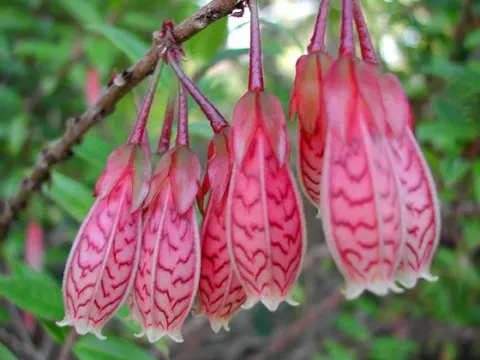
Agapetes
Agapetes hybrids
Agapetes is a genus of evergreen shrubs belonging to the Ericaceae family, native to the mountainous forests of the Himalayas and Southeast Asia. Many species within this genus are epiphytic, growing on trees or rocky outcrops, which dictates their specific horticultural needs.
What the section contains
Agapetes
A defining biological feature of Agapetes is the caudex, a thickened, tuberous base that acts as a storage organ for water and nutrients. This evolutionary adaptation allows the plant to thrive in regions where moisture levels fluctuate significantly throughout the seasons.
To cultivate this plant successfully, one must provide a very porous, acidic, and well-draining substrate. A mix consisting of peat, pine bark, perlite, and charcoal is recommended to mimic their natural epiphytic environment and prevent root suffocation.
Agapetes requires bright, indirect light to maintain its compact growth and produce its characteristic tubular, often brightly colored flowers. While it enjoys high humidity, good air circulation is essential to prevent physiological issues and promote healthy development.
Regular watering is necessary during the active growing season, but the substrate must be allowed to dry slightly between sessions. Excessive moisture, especially when trapped in the root zone, will quickly lead to irreparable damage to the root system and the caudex.
The most common threat to Agapetes is root rot caused by poor drainage or overwatering. Once the root system is compromised, the caudex often begins to soften, which usually indicates that the plant is beyond recovery.
Spider mites represent the primary pest challenge, particularly in indoor environments where low humidity levels are prevalent. Infestations can spread rapidly, causing leaf drop and weakening the plant's overall vitality.
Mealybugs are another persistent pest that hides in the leaf axils or under the foliage. Manual removal combined with systemic insecticidal treatments is often required to control these pests during an active infestation.
Fungal leaf spot diseases can occur if the foliage remains wet for extended periods in environments with poor airflow. Keeping the leaves dry and ensuring constant gentle ventilation helps to mitigate these risks effectively.
Maintaining plant hygiene through regular inspection and the removal of dead foliage is crucial for preventing the buildup of pathogens. Adhering to strict watering discipline remains the single most important aspect of preventing most biotic and abiotic threats.