
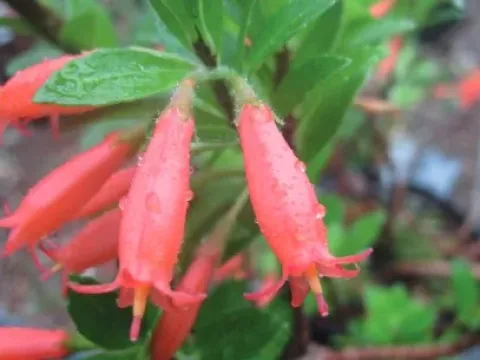
Agapetes buxifolia
Agapetes buxifolia
Agapetes buxifolia is an attractive evergreen epiphytic shrub belonging to the Ericaceae family. Native to the mountainous forests of the Himalayas and parts of China, it typically grows on trees or rocky outcrops in cool, misty environments.
What the section contains
Agapetes buxifolia
The plant is characterized by its small, box-like leathery leaves and striking, pendulous tubular flowers, which are typically red with V-shaped markings. Its unique morphology makes it a popular specimen for conservatories and indoor plant enthusiasts.
To cultivate Agapetes buxifolia successfully, growers must mimic its natural habitat. It requires high atmospheric humidity, bright indirect light, and a cool to moderate temperature range, ideally between 15°C and 22°C year-round.
The soil requirements are specific: the medium must be highly acidic, airy, and well-draining. Epiphytic mixes comprising shredded bark, perlite, and peat moss provide the optimal structure to support the plant's delicate root system.
Cultural practices include regular misting and careful watering with soft, lime-free water. During the growing season, a dilute application of ericaceous fertilizer is recommended to maintain vigorous foliage and promote consistent flowering cycles.
The primary threats to this plant are sap-sucking pests such as spider mites, which thrive in indoor environments with stagnant air and low humidity levels. Regular inspection and increased ventilation are critical for effective pest management.
Root rot caused by Phytophthora species is a major risk factor if the growing medium remains waterlogged for extended periods. Ensuring a porous substrate and a strict pot-drainage regimen is essential for long-term health and disease prevention.