
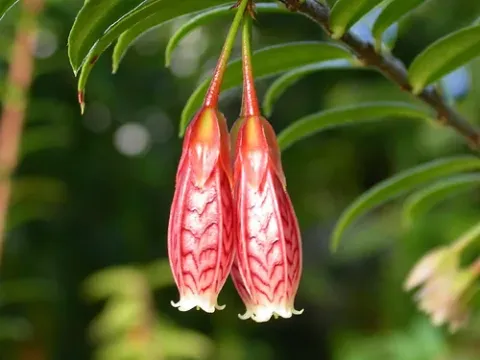
Agapetes atrosanguinea
Agapetes atrosanguinea
Agapetes atrosanguinea belongs to the Ericaceae family and is recognized for its unique, ornamental characteristics. In its native habitat, it grows primarily as an epiphyte within the montane forests of Southeast Asia, thriving in specialized niches.
What the section contains
Agapetes atrosanguinea
The cultivation of this plant requires a greenhouse environment that mimics high-humidity tropical conditions. It is not suitable for open-field agriculture in temperate regions and is grown primarily as a high-value botanical specialty in indoor garden systems.
An ideal growing medium must be highly porous and acidic. A substrate mix containing orchid bark, peat moss, and perlite provides the necessary aeration for the roots while maintaining consistent moisture levels around the root zone.
Environmental management is critical, with a temperature range of 15°C to 22°C being preferred. The plant requires bright, filtered light to maintain its compact, shrubby habit and to encourage the development of its distinctive, deep crimson tubular flowers.
The plant features a specialized tuberous root base (caudex) that serves as a reservoir for water and nutrients. This botanical adaptation allows the plant to withstand short periods of limited water availability, provided that atmospheric humidity remains high.
The most common pests affecting Agapetes in controlled environments include spider mites and mealybugs. These pests flourish in stagnant air conditions, necessitating good ventilation and periodic inspection of the foliage underside to prevent large infestations.
Root rot remains the most significant threat to the health of the plant, usually triggered by improper drainage or excessive watering. Maintaining a strict irrigation schedule and using pathogen-free potting media are essential to ensure the longevity of the specimens.