
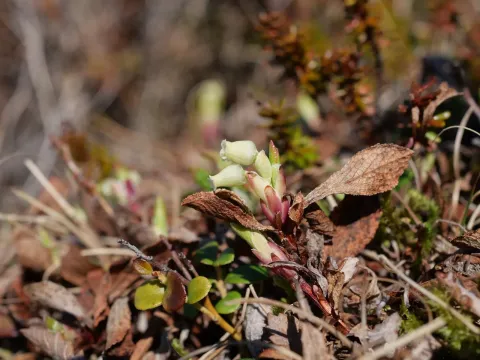
Alpine bearberry
Arctostaphylos alpinus
Alpine bearberry (lat. Arctostaphylos alpinus) is a deciduous dwarf shrub belonging to the Ericaceae family. It is naturally adapted to harsh arctic and subarctic climates, where it forms low, trailing mats across rocky or gravelly tundra landscapes.
What the section contains
Alpine bearberry
The plant requires acidic, well-draining, and nutrient-poor soils to thrive. In a cultivation setting, it is essential to mimic these specific soil conditions, as the root system is highly sensitive to compaction and waterlogging, which often leads to rapid decay.
Botanically, it is characterized by its wrinkled, leathery leaves that turn brilliant red during autumn, and its black, edible, but somewhat bitter drupes. The plant grows very slowly, making it a demanding species for those attempting controlled commercial or garden cultivation.
Agronomic management focuses on moisture regulation and soil acidity maintenance. The use of organic mulch, such as pine needles or acidic peat, is recommended to protect shallow roots from temperature extremes while preserving the required pH levels in the substrate.
The economic value of this culture lies primarily in its medicinal properties. The leaves contain arbutin, a glycoside with antiseptic effects, making them a significant source of raw materials for pharmacological production, particularly in northern regions where the plant grows wild.
The most common threats include fungal pathogens such as leaf spot diseases, which are triggered by poor air circulation or persistent dampness. Ensuring proper spacing and an open, sunny location is crucial for mitigating the risk of foliage-related fungal infections.
While the plant is generally resistant to pests due to its tough, leathery foliage, aphids may occasionally infest new shoots during an unusually warm season. Integrated pest management should prioritize manual removal or the application of mild, organic deterrents over synthetic chemicals.