
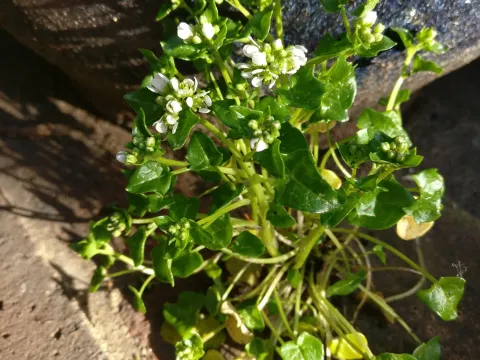
Scurvy-grass
Cochlearia
Scurvy-grass seeds are typically sown in early spring, as soon as the soil warms up to about 5–8 degrees Celsius. This plant is highly cold-tolerant, and young seedlings can easily withstand light spring frosts without suffering damage.
What the section contains
 Aragonese scurvygrass
Cochlearia aragonensis
Aragonese scurvygrass
Cochlearia aragonensis
 Atlantic scurvygrass
Cochlearia atlantica
Atlantic scurvygrass
Cochlearia atlantica
 Briggs' scurvygrass
Cochlearia briggsii
Briggs' scurvygrass
Cochlearia briggsii
 Cochlearia abulensis
Cochlearia megalosperma
Cochlearia megalosperma
Cochlearia abulensis
Cochlearia abulensis
Cochlearia megalosperma
Cochlearia megalosperma
 Cochlearia officinalis
Cochlearia officinalis
Cochlearia officinalis
 Cochlearia prolongoi
Cochlearia prolongoi
Cochlearia prolongoi
 Danish scurvygrass
Cochlearia danica
Danish scurvygrass
Cochlearia danica
 English scurvygrass
Cochlearia anglica
English scurvygrass
Cochlearia anglica
 Glastead scurvygrass
Cochlearia glastifolia
Glastead scurvygrass
Cochlearia glastifolia
 Icelandic scurvygrass
Cochlearia islandica
Icelandic scurvygrass
Cochlearia islandica
 Pyrenean scurvygrass
Cochlearia pyrenaica
Scottish scurvygrass
Cochlearia scotica
Pyrenean scurvygrass
Cochlearia pyrenaica
Scottish scurvygrass
Cochlearia scotica
 Scurvy-grass
Cochlearia groenlandica
Scurvy-grass
Cochlearia groenlandica
 Scurvygrass
Cochlearia micacea
Scurvygrass
Cochlearia micacea
 Scurvygrass
Cochlearia aestuaria
Scurvygrass
Cochlearia aestuaria
Scurvy-grass
For a continuous supply of fresh greens, sow seeds every 14–20 days throughout the growing season. Late autumn sowing is also possible; in this case, seeds are planted in late October to undergo natural stratification, ensuring early germination in the spring.
Sow seeds at a shallow depth of no more than 1–1.5 centimeters, as they are quite small. A planting row spacing of 20 centimeters is recommended to ensure proper airflow and prevent fungal development in the plant beds.
Seedlings usually emerge within 10–14 days, provided the soil remains consistently moist. Once the plants develop two or three true leaves, thin them out to a spacing of 10–12 centimeters to give each plant sufficient room to form a healthy rosette.
To speed up the harvest, consider growing scurvy-grass in a plastic greenhouse or under garden fleece covers. This can advance the harvest date by several weeks, providing fresh vitamin-rich greens earlier than outdoor-grown plants.
Scurvy-grass thrives in moist, well-drained, and fertile loamy or sandy soil with a neutral to slightly alkaline pH. It has a high water requirement and is very sensitive to drought, making regular irrigation essential for success.
The ideal climate for this crop consists of cool, temperate summers, as excessive heat triggers premature bolting and flowering. High temperatures also negatively affect the taste of the leaves, making them tougher and significantly more bitter.
The plant benefits greatly from organic matter such as compost or well-rotted manure worked into the soil before planting. Avoid heavy applications of nitrogen fertilizers shortly before harvesting to prevent nitrate accumulation in the foliage.
Select a location with protection from harsh midday sun, although the plant does require good light. Morning sun or filtered light is perfect for encouraging robust growth while keeping the plant's succulent, delicate leaves from wilting.
Maintaining consistent soil moisture is the primary factor in successful cultivation. During dry spells, water daily, but ensure the drainage is sufficient to prevent waterlogging, which could cause root rot in the leaf rosettes.
The total yield of scurvy-grass is heavily influenced by soil fertility and irrigation consistency, typically ranging from 1.5 to 3 kilograms of fresh produce per square meter of cultivation space.
Initial harvests of individual leaves can begin 30–45 days after emergence. It is crucial to harvest leaves before they become too large and coarse to ensure the best culinary quality and flavor profile.
By selectively harvesting only the outer, fully mature leaves and leaving the central bud intact, you can extend the production period of a single plant by several months, significantly increasing the overall yield per season.
Scurvy-grass is capable of producing multiple flushes of growth, making it a productive choice for small-scale growers. Biological productivity is highest during the first half of the season before the plant enters its reproductive stage.
Overall yields decrease significantly if the plant bolts prematurely due to heat stress or moisture deficiency. Regularly removing nascent flower stalks will help keep the plant in a vegetative state and prolong the harvest period.
Flea beetles are the most common pest for scurvy-grass, often capable of destroying young seedlings in just a few days during hot, dry weather. Using floating row covers is an effective and safe way to protect young plants.
In humid conditions with poor ventilation, plants can fall victim to clubroot, a fungal soil-borne disease that causes swellings on the roots. Adopting a strict crop rotation schedule is the best preventative measure against this pathogen.
Aphids may infest the underside of the leaves, sucking the cell sap and causing the leaves to curl or deform. For minor infestations, washing the plants with a sharp stream of water or using insecticidal soap sprays is usually effective.
Powdery mildew can appear toward the end of the season when nighttime and daytime temperatures fluctuate significantly. Improving garden hygiene and ensuring adequate space between plants helps reduce the likelihood of this infection.
Slugs and snails can cause substantial damage by feeding on leaf edges at night. Scattering wood ash around the plants or using manual traps can help manage these pests without relying on heavy chemical controls.
Harvest scurvy-grass selectively by using sharp scissors or a knife to cut individual mature leaves from the bottom of the rosette. This selective method allows the newer leaves in the center to continue growing.
The best time for harvesting is during the early morning after the dew has evaporated, as this keeps the greens crisp for a longer period. Since harvested leaves wilt quickly, place them in a cool spot or refrigerator as soon as possible.
For large-scale harvests, the entire plant can be cut at the crown before it begins to send up flower stalks. At this point, the leaves have the most tender texture and the highest concentration of vitamin C.
Store harvested greens in a refrigerator at temperatures between 0 and 2 degrees Celsius with high humidity. Properly stored, the leaves can retain their culinary quality for about 5 to 7 days.
If you intend to save seeds, allow the most vigorous plants to remain until the pods turn a straw-yellow color. Collect the seeds in dry weather, being careful to harvest them before the pods crack and scatter the contents.