
Atlantic scurvygrass
Cochlearia atlantica
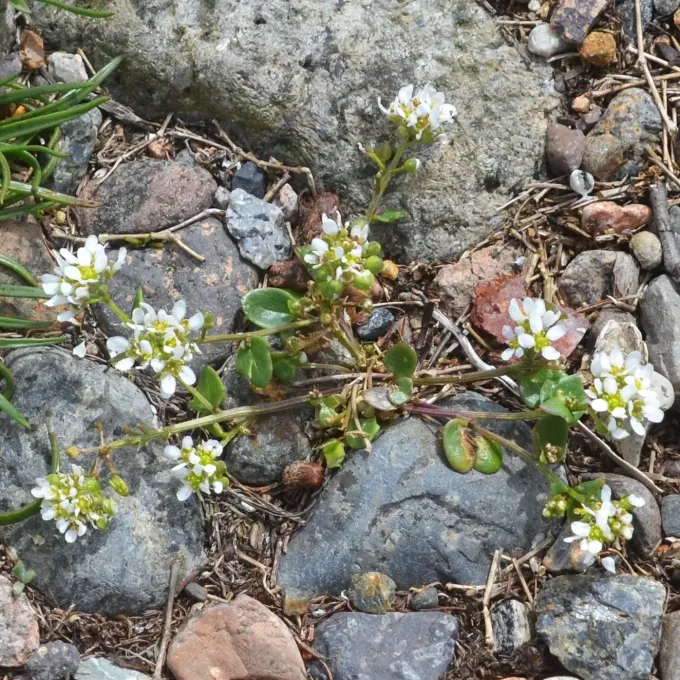
Description
Sowing dates
Atlantic scurvygrass is a cold-hardy perennial herbaceous plant belonging to the Brassicaceae family. In temperate climates, sowing in open ground is usually carried out in early spring, as seeds are capable of germinating even in cool soil conditions.
To obtain an early harvest, winter sowing is often practiced, allowing the plants to utilize the moisture available immediately after snowmelt. When grown in greenhouses or protected environments, sowing dates can be adjusted to ensure a continuous supply of fresh greens throughout the season.
When sowing, it is important to ensure a seeding depth of about 1–1.5 centimeters. Since the seeds are small, they require firm contact with the soil, so light rolling of the surface after sowing is recommended to improve germination rates and uniformity.
The crop develops rapidly under favorable conditions, so dense stands must be thinned. The optimal spacing between plants in a row should be about 10–15 centimeters, which prevents competition for sunlight and nutrients between individual plants.
The crop shows a high degree of adaptability, but requires stable soil moisture during the initial stages of vegetation. Once established, Atlantic scurvygrass becomes more resilient to short-term fluctuations in humidity, which simplifies routine maintenance.
Growing requirements
Atlantic scurvygrass thrives best in areas with light, well-drained sandy loam or loamy soils. A crucial condition for full development is a neutral or slightly alkaline soil reaction, as growth significantly slows down in strongly acidic soils.
The plant has high requirements for soil moisture, but it reacts extremely negatively to waterlogging and poor root aeration. The choice of the plot should exclude low-lying areas where meltwater or rain accumulates, as this promotes the development of root rots.
The plant prefers open, well-lit locations, although it can tolerate light shading during hot summer afternoons. In general, it is a photophilous crop that requires full sunlight to accumulate vitamins and biologically active substances in its leaves.
Agricultural requirements include regular cultivation between rows to ensure aeration of the root system. This is particularly relevant on heavy soils prone to forming a dense crust after irrigation or rainfall, which hinders normal soil gas exchange.
Fertilization is carried out moderately using balanced mineral or organic fertilizers. An excess of nitrogen can lead to excessive foliage growth at the expense of flavor quality, so preference is given to formulations with higher potassium and phosphorus content.
Yield
The yield of Atlantic scurvygrass directly depends on the frequency of leaf harvesting and adherence to proper agricultural practices. If managed correctly, the plant can provide multiple harvest cycles per growing season, recovering quickly after partial foliage removal.
Maximum commercial yield is achieved with optimal planting density and regular irrigation. The leaf rosette is capable of rapid regeneration, making this crop economically attractive for small-scale production and home gardening.
Fresh leaf rosettes, which are characterized by their juiciness and distinct pungent flavor, are considered the main marketable product. The mass of a single plant can vary, but productivity remains consistently high when optimal growing conditions are maintained.
In industrial contexts, yield potential is estimated by the mass of greenery cut at ground level before the onset of the active bolting phase. Timely harvesting prevents the coarsening of plant tissues and preserves the high taste characteristics of the product.
The final harvest total depends on the climatic characteristics of the region and the presence of protection from extreme temperatures. In regions with milder climates, the plant may show a longer productive life compared to areas with harsh temperature swings.
Main diseases and pests
As a member of the Brassicaceae family, Atlantic scurvygrass is most susceptible to flea beetles, which can cause significant damage to the crop during the seedling stage. Both agrotechnical and biological control methods are used for protection.
Under high humidity and unfavorable temperature regimes, plantings may be affected by powdery mildew or various types of root rot. Crop rotation and the prevention of waterlogging are critical preventive measures to control pathogens.
Pests such as aphids or slugs may also be attracted to the succulent leaves of the plant, especially during rainy seasons. Constant monitoring of the crops allows for early detection of issues, minimizing losses through localized intervention.
To reduce disease risk, it is recommended to avoid monoculture farming on the same plot for several years. Returning the crop to a previous plot is possible only after at least three years, which helps break the life cycles of specific pests and fungi.
Non-woven protective materials are often used as a barrier against pests while simultaneously maintaining an optimal microclimate. This approach minimizes the use of chemical pesticides and supports the production of eco-friendly greens.
Harvesting
Harvesting of Atlantic scurvygrass begins when the leaves reach marketable size but have not yet become coarse. Depending on the intended use, this can involve selective cutting of individual leaves or harvesting whole rosettes using sharp tools that avoid damaging the growth point.
The best time for harvesting is during the early morning hours, when the leaves contain the maximum amount of moisture and nutrients. After harvesting, the produce loses turgor quickly, so it requires immediate cooling or rapid transport to market to maintain quality.
For long-term storage, fresh produce should be packed in perforated containers that provide necessary humidity levels and air circulation. In cold storage at temperatures of 0–2 degrees Celsius, the greenery can retain freshness for several days.
It is important not to allow the plants to bolt, as the leaves become bitter and tough once the reproductive phase begins. Therefore, regular harvesting is not only a way to gather produce but also a crucial method of controlling the plant's physiological development.
After the growth cycle is completed, the site should be cleared of all plant debris to prevent the buildup of pathogens in the soil. Proper organization of the harvesting process ensures product quality and extends the overall productive life of the planting.