
Scurvy-grass
Cochlearia groenlandica
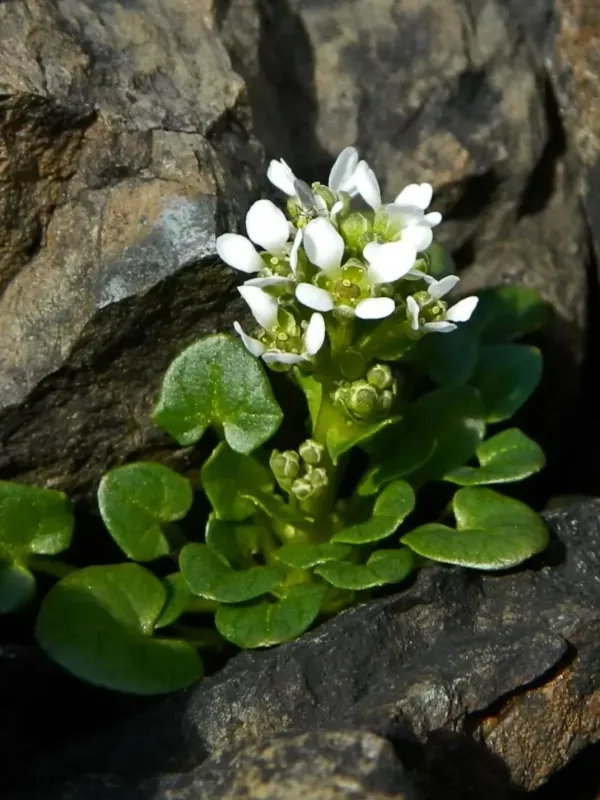
Description
Sowing dates
Scurvy-grass is a remarkably hardy plant that thrives in cool environments. For the best results, seeds should be sown in early spring as soon as the soil can be worked, as the seeds require cool temperatures to germinate effectively.
Winter sowing is also a highly effective method for this species. By sowing in late autumn before the ground freezes, the seeds undergo natural stratification, ensuring vigorous growth as soon as the spring thaw begins.
The seeds are tiny and should be sown shallowly, usually no deeper than 0.5 to 1 centimeter. Pressing the soil firmly after sowing ensures that the seeds stay in contact with soil moisture, which is vital for germination.
In greenhouse settings, producers can start seeds in late winter to secure an early supply of greens. This controlled environment allows for a consistent production cycle that can be adjusted based on local market demands.
Row spacing should be maintained at about 20 centimeters to allow for proper airflow. Adequate space between plants is crucial to prevent moisture-related diseases that can arise in the humid conditions this plant prefers.
Growing requirements
Belonging to the Brassicaceae family, this crop favors cool, moist conditions similar to its natural arctic habitat. It performs best in regions where temperatures remain moderate throughout the growing season.
The soil should be rich in organic matter and possess excellent drainage capabilities. While the plant appreciates moisture, it will not tolerate waterlogged ground, which can quickly lead to root decay.
A neutral to slightly alkaline soil pH is optimal for nutrient uptake. In regions with acidic soils, adding agricultural lime prior to planting can significantly improve overall plant health and yield quality.
Light levels are very important; although scurvy-grass is adapted to low light intensity, full or partial sun exposure helps concentrate the essential oils and vitamin content in the leaves.
Maintaining consistent soil moisture is essential for quality production. If the soil dries out completely, the plant may trigger its reproductive phase early, resulting in bolting and a bitter taste.
Main diseases and pests
Flea beetles are the primary insect threat to this crop. These pests can cause significant damage to the foliage, especially in young seedlings, necessitating the use of protective covers or nets.
Clubroot is a serious fungal disease that can plague members of the Brassicaceae family. It causes galls on the roots and stunts plant growth, making proper crop rotation a mandatory management practice.
Powdery mildew often appears during periods of high humidity and temperature fluctuations. This disease manifests as a white, dusty layer on the leaves, which hinders photosynthesis and reduces the overall yield.
Slugs and snails can consume the succulent leaves rapidly. Using physical barriers, such as copper tape or crushed eggshells around the perimeter of the bed, is an effective way to manage these pests.
Proper sanitation is the key to preventing most diseases. Removing debris, ensuring good plant spacing, and avoiding overhead watering help keep the leaf surfaces dry and healthy throughout the growing season.
Harvesting
Harvesting is typically done through selective cutting of the outer leaves. This "cut-and-come-again" approach allows the central crown to continue producing fresh leaves for an extended period of time.
The best quality is achieved when leaves are harvested in the cool morning hours. This ensures the leaves are turgid and contain the maximum amount of nutrients and flavor compounds.
Care should be taken not to damage the plant's core during harvesting. Using clean, sharp scissors or a knife allows for precise cuts, which helps the plant recover more quickly for subsequent harvests.
Post-harvest management is critical as the leaves are perishable. They should be cooled immediately after picking and stored at temperatures between +2 and +4 degrees Celsius to maintain shelf life.
For those looking to preserve the harvest, the leaves can be frozen. While they may lose some texture, they retain the characteristic sharp, tangy flavor that makes scurvy-grass a unique culinary ingredient.