
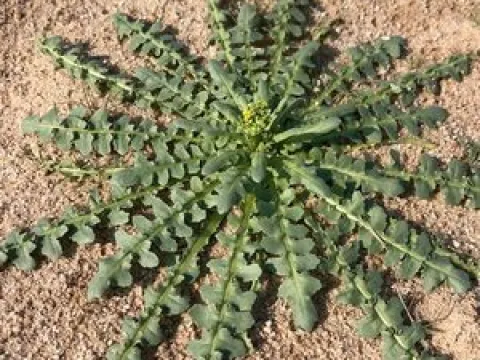
Schimpera
Schimpera
Schimpera, specifically the species Schimpera arabica, is a hardy annual herbaceous plant belonging to the Brassicaceae family. It is particularly valued for its resilience in arid environments where traditional crops struggle to germinate and mature.
What the section contains

Schimpera
The sowing period is typically synchronized with the onset of the rainy season. The seeds require moisture to break dormancy, and rapid root development is crucial for the plant to survive in environments where rainfall is sporadic.
Proper land preparation involves creating a fine tilth that allows for optimal seed-to-soil contact. Deep sowing should be avoided to prevent energy depletion of the emerging seedlings, as the energy reserves in the seeds are relatively small.
Spacing between rows should be optimized to balance plant density with water availability. In regions with extremely low water availability, lower planting densities are recommended to ensure each plant receives sufficient nutrients and moisture for seed development.
Successful establishment depends on timely sowing. Agronomists emphasize that identifying the correct window is essential, as emerging seedlings are highly sensitive to sudden high-temperature spells during the initial days of growth.
Schimpera thrives in full sun exposure and is highly adapted to high solar radiation. It is a true xerophyte, capable of maintaining physiological functions under conditions that would be lethal to most conventional agricultural crops.
The plant demonstrates remarkable versatility regarding soil types, performing well in sandy, loamy, and even skeletal soils. It requires excellent soil drainage, as waterlogged conditions are highly detrimental to its taproot system.
Neutral to slightly alkaline pH levels are ideal for Schimpera. Soils with high saline content or extreme acidity tend to restrict vegetative growth and significantly reduce the oil concentration in the developing seeds.
Climate adaptability is the plant's greatest asset. It performs exceptionally well in regions where temperatures exceed 35 degrees Celsius, utilizing metabolic pathways that minimize moisture loss while sustaining growth throughout the dry season.
Fertilization requirements are generally low, as the plant is efficient at extracting nutrients from impoverished soils. However, small applications of phosphorus during the early vegetative phase can enhance reproductive output in managed agricultural settings.
The economic value of Schimpera lies in its seed production, which is harvested for oil extraction. Yield stability is the defining characteristic of this crop, providing food security in marginal lands where other oilseeds fail.
Harvesting should be timed carefully as the pods reach physiological maturity. Early harvesting can result in high moisture content in the seeds, while delayed harvesting significantly increases the risk of pod shattering and seed loss.
The quality of the oil extracted from the seeds makes it suitable for both culinary applications and industrial use. The yield potential is heavily influenced by the distribution of rainfall during the pod-filling stage.
Modern agronomic practices focus on increasing the number of fertile pods per plant through selective breeding. These efforts are aimed at stabilizing production levels even during years of severe drought, which is vital for local communities.
Post-harvest processing involves drying the harvested material to safe moisture levels to prevent fungal growth during storage, ensuring the longevity and quality of the stored oilseeds.
The crop is vulnerable to crucifer flea beetles, which can devastate entire stands during the seedling phase. Integrated pest management strategies are often necessary to protect young plants until they establish a more robust leaf cover.
Fungal diseases, including powdery mildew and Alternaria blight, are prevalent in regions where humidity levels spike unexpectedly. Proper field spacing and crop rotation help mitigate these risks by reducing the humidity around the plant canopy.
Aphids pose a recurring threat by colonizing the inflorescences. They damage the developing ovules, which leads to shriveled seeds and significant yield loss if not managed with systemic insecticides during the peak flowering stage.
Root rots are primarily caused by poor soil drainage and excessive irrigation practices. Ensuring a well-structured soil profile is the most effective preventative measure against these soil-borne pathogens.
Weed management is critical during the first few weeks of growth. Due to its initial slow growth rate, Schimpera can be easily outcompeted by aggressive weeds, necessitating mechanical weeding or selective herbicide application to ensure a successful yield.