
Scurvygrass
Cochlearia micacea
Description
Sowing dates
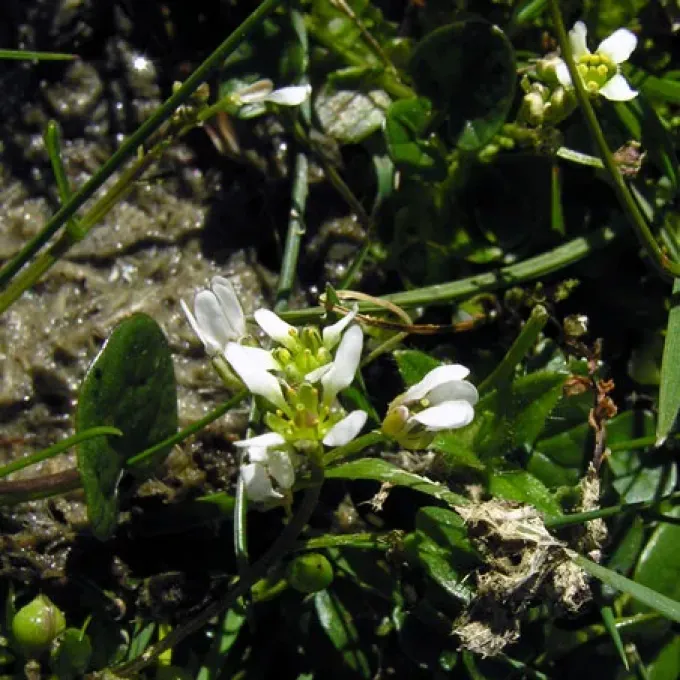
Scurvygrass (Cochlearia micacea) is a perennial herbaceous plant belonging to the Brassicaceae family. It is a rare species native to moist, stony environments near streams in parts of the United Kingdom, where it thrives in cool, damp conditions.
When cultivating this crop, timing is critical. Sowing should be carried out in early spring, as soon as the soil is workable, to allow the plants to establish before the onset of summer heat. Alternatively, late autumn sowing can be performed to allow natural stratification of the seeds.
The seeds of Cochlearia micacea have a dormancy period that is best broken through cold stratification. For home and commercial propagation, keep the seeds in a moist medium at low temperatures for several weeks before sowing them at a shallow depth of approximately 0.5 to 1 cm.
Once seedlings emerge, they should be thinned to ensure adequate spacing. A distance of 15–20 cm between plants is recommended to promote good airflow, which is vital for preventing fungal diseases in the dense leaf rosettes.
Young plants require consistent moisture during the initial establishment phase. Once the root system is well-developed, the plant becomes slightly more resilient, but it should never be allowed to dry out completely.
Growing requirements
The success of Scurvygrass production depends on providing a habitat that mimics its natural environment. The soil should be consistently moist, rich in organic matter, and possess excellent drainage capabilities to prevent root rot.
A neutral to slightly acidic soil pH is ideal for this species. Given its natural affinity for mineral-rich habitats, supplementing the soil with small amounts of calcium or crushed limestone can support healthy growth and plant vigor.
Regarding light, the plant performs best in semi-shaded conditions. Intense direct sunlight can lead to leaf yellowing and reduced culinary quality. A location that receives morning sun and afternoon shade is optimal for temperature control.
Temperature management is key, as Scurvygrass prefers cool climates. Maintaining temperatures between +15°C and +22°C ensures the best leaf production. During winter, provide light mulch to protect the crowns from extreme frost.
Proper weed management is essential. Due to its relatively slow initial growth, young Scurvygrass plants can be easily outcompeted by aggressive weeds, necessitating hand-weeding or light cultivation near the base.
Main diseases and pests
As a member of the cabbage family, Scurvygrass is susceptible to common pests like flea beetles. These insects can cause significant damage to the foliage, which is particularly detrimental if the crop is intended for fresh market consumption.
Downy mildew and other fungal pathogens often thrive in the same moist, cool conditions that the plant prefers. Monitoring for white or grey powdery growth on the undersides of leaves is a crucial part of crop protection.
Root rot remains a major threat if soil drainage is compromised. To minimize this risk, ensure that the planting site is raised or sufficiently aerated to prevent water stagnation around the base of the plant.
Gastropods such as slugs and snails are highly attracted to the succulent leaves of Scurvygrass, especially in wet weather. Using physical barriers like copper tape or ash can effectively keep these pests at bay.
Viral infections may occur, often transmitted by aphids. Because there is no cure, the primary defense strategy involves maintaining high crop hygiene, using disease-free stock, and controlling aphid populations early.
Harvesting
Harvesting Scurvygrass involves picking the leaves once the plant has formed a substantial rosette. It is a cut-and-come-again crop, meaning that with careful pruning, the plant will produce new foliage throughout the growing season.
The harvest should be conducted during the cooler parts of the day, preferably early morning, to ensure the leaves remain crisp and retain their high nutritional content, specifically their characteristic vitamin C levels.
After picking, the leaves should be cleaned and chilled immediately. They are highly perishable and prone to wilting, so cold storage at 0°C to +2°C is essential to maintain freshness for up to a week.
In terms of usage, the crop is primarily valued as a culinary herb. Its sharp, horseradish-like flavor profile makes it a unique addition to salads, cold soups, and fish dishes, appealing to niche gourmet markets.
For commercial success, proper post-harvest packaging is vital. Using breathable, moisture-retaining materials prevents the leaves from drying out during distribution, ensuring the product reaches the consumer in prime condition.