
Seven-leaved toothwort
Cardamine heptaphylla
Description
Growing requirements
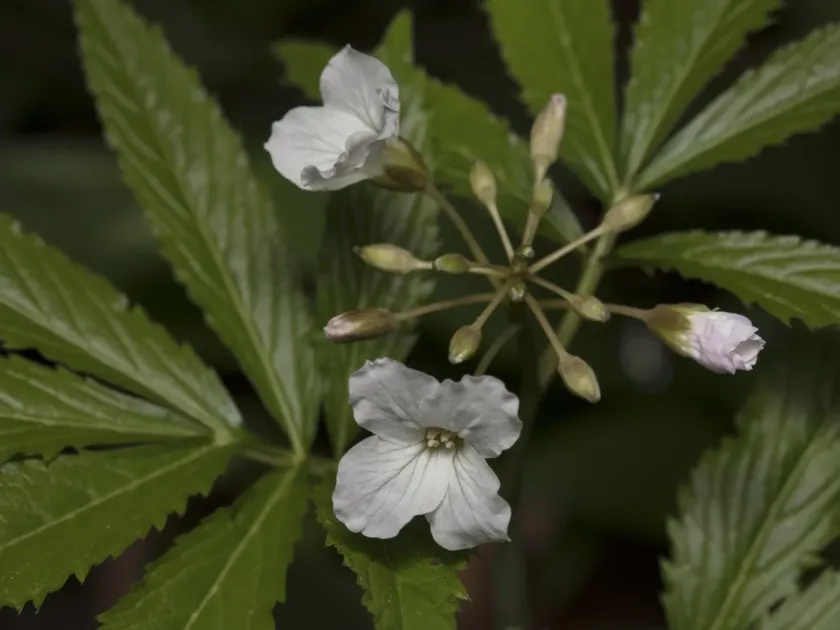
The seven-leaved toothwort (Cardamine heptaphylla) is a perennial herbaceous plant belonging to the Brassicaceae family. It is native to the forests of Central and Southern Europe, typically growing in shaded, humus-rich environments.
Botanically, the plant is distinguished by its pinnate leaves with seven leaflets, which give it a unique appearance. It produces delicate, showy flowers in the spring that brighten up dark woodland patches in gardens.
The plant thrives in moist, loose, and nutrient-dense soil. It is essential to maintain consistent soil moisture, as the plant does not tolerate drought. Organic matter such as leaf mold is highly beneficial for its development.
Regarding climate, it prefers cool, temperate conditions with deep to partial shade. Exposure to intense sunlight usually leads to scorched foliage and the rapid decline of the plant, making it unsuitable for open areas.
It is primarily grown as an ornamental plant in shaded garden settings, rock gardens, and naturalistic landscape designs. Its ability to form colonies makes it an excellent choice for ground coverage under deciduous trees.
Main diseases and pests
Slugs and snails are the most significant pests for Cardamine heptaphylla, as they are attracted to its soft, lush foliage. Integrated pest management using traps or eco-friendly barriers is recommended during wet weather.
Root rot is a common issue caused by poor drainage or overwatering. Maintaining a well-aerated soil structure is crucial to preventing pathogens that exploit anaerobic conditions in the root zone.
Crucifer pests like flea beetles can occasionally pose a threat during dry periods. Keeping the plant properly hydrated generally makes it more resistant to these minor infestations.
Fungal infections can develop if the foliage remains wet for extended periods, especially in stagnant air. Ensuring good airflow between plants is a key preventive measure in garden maintenance.
Regular monitoring of the foliage and removing any decaying debris around the base of the plant helps maintain a healthy environment and prevents the spread of potential pathogens.