
Pyrenean scurvygrass
Cochlearia pyrenaica
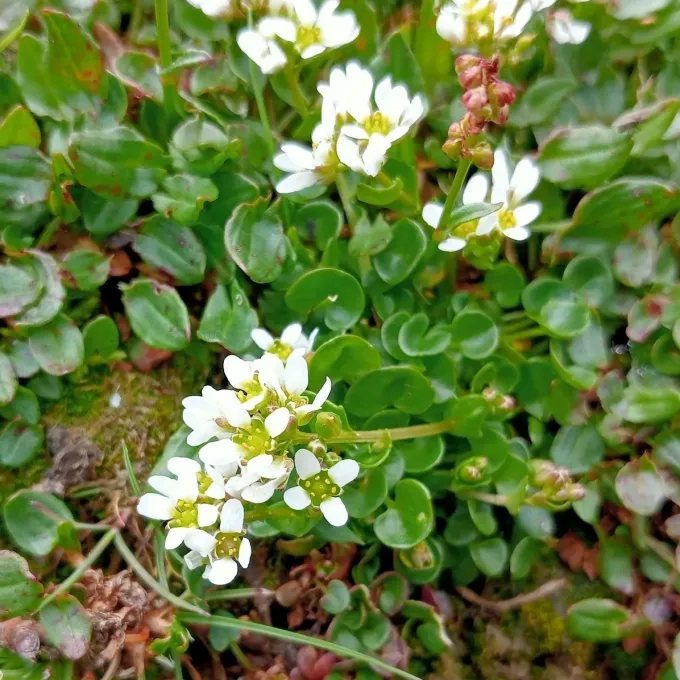
Description
Sowing dates
Pyrenean scurvygrass (Cochlearia pyrenaica) is a hardy perennial herb belonging to the Brassicaceae family, recognized for its vitamin-rich, pungent-flavored leaves.
Sowing should take place in early spring or autumn, depending on the climatic zone, using seeds that require a period of cool temperatures to germinate efficiently.
The seeds are tiny and should be sown shallowly, ideally about 0.5 to 1 cm deep in rows spaced 20-30 cm apart to ensure proper air circulation.
Optimal germination occurs at cool temperatures; therefore, avoiding excessive summer heat during the initial growth stage is critical for successful stand establishment.
Once seedlings have developed at least two true leaves, thin them out to a spacing of 10-15 cm to allow the rosettes to develop their full nutritional potential.
Growing requirements
This crop thrives in cool, moist, and shady environments, making it suitable for areas of the garden that may be challenging for more light-demanding vegetables.
Soil should be rich in organic matter, consistently moist, and well-drained, with a preference for a slightly acidic to neutral pH level.
Regular irrigation is essential, as the plants are highly sensitive to drought; dry conditions often induce early bolting, which negatively impacts the leaf harvest.
While the plant is winter-hardy, mulching can help maintain soil moisture levels and protect the roots during periods of extreme temperature fluctuation.
Minimal fertilization is required; a light application of well-rotted compost during soil preparation is generally sufficient to sustain healthy growth throughout the season.
Main diseases and pests
The main pests affecting Pyrenean scurvygrass are flea beetles, which can cause significant damage to the foliage, especially during warm, dry spells in spring.
Fungal diseases, such as powdery mildew, may emerge in conditions of high humidity and poor ventilation, often resulting in reduced marketability of the produce.
Practicing strict crop rotation is recommended to break the life cycle of pests and diseases that commonly affect members of the cabbage family.
Providing sufficient spacing between plants and keeping the foliage dry when watering can significantly lower the risk of developing bacterial or fungal infections.
Integrated pest management, including the use of floating row covers, provides an effective physical barrier against insect pests without the need for synthetic pesticides.
Harvesting
Harvesting begins once the plants have established a healthy rosette, which typically occurs within 6 to 8 weeks after the seeds have germinated.
The leaves should be harvested by cutting them from the outer part of the rosette, which allows the plant to continue producing new growth for several weeks.
For optimal quality, harvest in the early morning when the leaves are fully hydrated and crisp, ensuring better shelf life after the produce is gathered.
Pyrenean scurvygrass is best consumed fresh in salads or as a garnish, as the heat and pungency of the leaves are most pronounced in their raw state.
If not used immediately, the leaves can be stored in a perforated bag in the refrigerator, where they will maintain their quality for several days.