
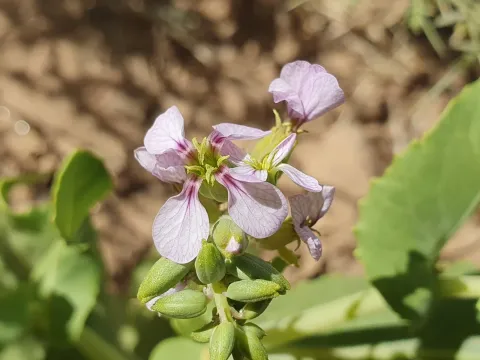
Schouwia
Schouwia
The sowing of Schouwia typically aligns with the onset of seasonal rainfall, which is essential for successful germination in arid environments. Proper moisture management is the most critical factor during the initial establishment phase of this crop.
What the section contains

Schouwia
Optimal soil temperatures are necessary to stimulate uniform sprouting. Producers often monitor local environmental cues to determine the exact planting window, ensuring the seeds are not exposed to excessive heat before rooting.
Precision seeding equipment is recommended to maintain adequate plant density. A planting depth of approximately 1 to 2 centimeters is sufficient to protect seeds while allowing rapid emergence of the hypocotyl.
Seedbed preparation should focus on minimizing moisture evaporation, often achieved by consolidating the soil surface after sowing. In commercial trials, spacing is adjusted to ensure that each plant has access to limited soil nutrients.
Post-emergence care involves observing the seedlings' vigor. In the initial weeks, the plants utilize the available moisture to establish a deep root system, which is vital for their survival during the subsequent maturation stages.
Schouwia belongs to the Brassicaceae family and is recognized for its remarkable ability to thrive in harsh, desert-like conditions. It is a succulent herb native to North Africa and the Arabian Peninsula, adapted to withstand prolonged water scarcity.
This crop prefers well-drained, sandy, or rocky soils. It is highly tolerant of saline environments, making it a viable candidate for agricultural projects in areas where traditional crops fail due to soil salinity.
High light intensity is essential for Schouwia to reach its full biomass potential. The plant employs specialized physiological mechanisms to manage extreme solar radiation and high ambient temperatures characteristic of its native habitat.
Although naturally drought-tolerant, supplemental irrigation during critical growth stages can significantly increase yields. Managing the water supply allows the crop to maintain its succulent foliage, which is its primary agricultural value.
Schouwia plays a significant role in desert greening and soil stabilization. By preventing wind erosion and improving soil structure, it acts as a pioneer species that prepares the ground for more demanding plant varieties in ecological restoration projects.
Schouwia is generally resistant to many common agricultural pests due to its specific chemical profile and growth in isolated environments. However, localized infestations of aphids or caterpillars can occur during periods of high humidity.
Fungal diseases, such as root rot or mildew, may arise if the soil drainage is inadequate. Proper field management, specifically avoiding stagnant water around the root zone, is the most effective preventative measure against these threats.
In some regions, desert locusts pose a seasonal threat to succulent vegetation, including Schouwia. Farmers must monitor local entomological reports to implement protective measures if large migratory swarms are predicted.
Bacterial blight can occasionally affect the foliage, especially in dense planting scenarios with poor airflow. Improving plant spacing and monitoring crop hygiene are essential steps to keep the plantation healthy and productive.
Weed management is rarely an intensive task for this crop because it typically dominates the nutrient-poor niches where it is grown. However, early-season weeding can give the crop a competitive advantage in securing limited soil resources.
Harvesting Schouwia is usually performed manually, particularly when the crop is grown for local forage or medicinal consumption. The timing depends on whether the goal is leaf biomass or seed production.
For optimal nutritional quality, the biomass should be harvested before the plant enters the advanced reproductive or lignified phase. Morning harvests are preferred to retain the freshness and moisture content of the leaves.
If producing seeds, the plants should be allowed to reach physiological maturity. Once the pods turn color, they are harvested and dried in controlled environments to prevent seed shattering and loss.
Post-harvest processing involves cleaning the material to remove debris and ensuring adequate ventilation during the drying process. Proper storage in cool, dry conditions prevents the development of spoilage microorganisms.
The harvested stalks and unused remains can be incorporated back into the soil as organic matter. This practice supports sustainable soil enrichment, which is crucial for maintaining the productivity of arid farming systems.