


Reference · Crops
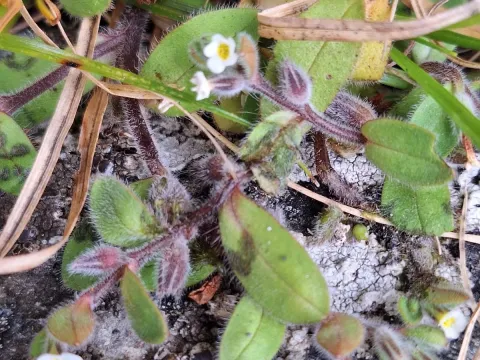
Forget-me-not
Myosotis L.
Forget-me-not (Myosotis L.) is a member of the Boraginaceae family. In agricultural and horticultural practice, seeds are typically sown in open ground during late June or July, allowing the plant to develop a strong foliage rosette before the winter onset.
5
items
What the section contains
Marketplace
Products in this section · 12


Terramidin
Nanjing No.1 Pesticide Factory of Red Sun Group Co., Ltd.
Herbicides
0
0
1 offer
32.06 €per pack
Buy
Forget-me-not
For early bloom production, seeds are started indoors in late winter or early spring using seed trays or greenhouse modules. The seeds are minute and should be surface-sown with a light dusting of medium, requiring light for optimal germination.
Germination usually takes between 14 to 20 days when temperatures are maintained at 18–20 degrees Celsius. Consistent soil moisture must be managed to ensure successful seedling emergence and root development.
Seedlings are transplanted to their permanent location once they develop three to four true leaves. Spacing typically ranges from 15 to 20 centimeters depending on whether the goal is mass bedding or individual ornamental display.
Direct winter sowing is also an option in regions with mild winters, as the seeds undergo natural stratification, often resulting in more robust spring growth.
This crop thrives in partial shade or cool, dappled light environments. Excessive direct sunlight in warmer climates often causes premature wilting and reduces the overall lifespan of the blooms.
The ideal soil for Myosotis is loose, fertile, and well-drained. While the plant appreciates consistent moisture, it is highly sensitive to waterlogging, which can rapidly cause root rot.
The soil pH should ideally remain within the neutral to slightly acidic range. Over-fertilization, particularly with high-nitrogen formulas, tends to prioritize leafy growth at the expense of floral output.
Temperatures ranging from 15 to 22 degrees Celsius are optimal for active vegetation. While cold-hardy, the plants should be protected from harsh, dry winter winds in regions with little snow cover.
Routine irrigation is essential, particularly during the pre-flowering and peak blooming stages, as the shallow root system is highly susceptible to drought-induced stress.
The most common disease threat to Myosotis is powdery mildew, which manifests as white fungal patches on leaves. This is most prevalent in environments with high humidity and poor air circulation.
Gray mold (Botrytis cinerea) is another significant risk, often attacking the crown of the plant during cool, damp spring weather, leading to sudden decay of the foliage and stems.
Aphids and flea beetles are the primary pests that damage the plant by feeding on tender new growth. Infestations can cause distorted leaf development and damage to the developing flower buds.
Slugs and snails can also pose a threat, particularly in damp garden settings. Maintaining clear areas around the plants and regular weeding can significantly reduce pest habitat.
Integrated pest management, including systemic fungicides and cultural practices like proper plant spacing to enhance airflow, is recommended for healthy crop development.
For ornamental or commercial use, stems are harvested when approximately 70-80 percent of the flower buds have opened. Cut stems should be placed immediately into cool water to maintain turgidity.
Seed harvesting should be timed carefully as the seed pods begin to turn brown but before they shatter. This process often requires multiple collections since maturity across the plant can be uneven.
Once flowering has completed, the plants are often removed from the site, as many species are biennial or short-lived perennials and lose their ornamental appeal after the initial bloom cycle.
To maintain variety purity, ensure that different Myosotis species are planted at a distance, as they can cross-pollinate, leading to unwanted color variations in future generations.
Stored seeds should be kept in airtight paper envelopes in a cool, dark environment. Under these conditions, the viability of the seeds can be maintained for up to three years.