
Filarszky lungwort
Pulmonaria filarszkyana
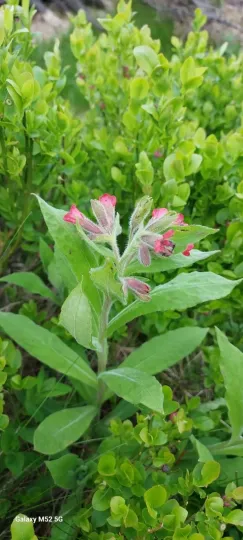
Description
Sowing dates
Filarszky lungwort is propagated primarily by vegetative means or by seeds. Sowing seeds is conducted before winter in open ground or in seedling trays in late winter to obtain early sprouts.
For vegetative propagation, dividing the bush is recommended to be done in early autumn or early spring when the plant is in a dormant state. This allows for quickly obtaining mature specimens that retain varietal characteristics.
The optimal planting distance between plants should be from 30 to 40 centimeters, which provides enough space for the plant to form a robust root system and a beautiful foliage rosette.
After planting, the soil around the lungwort must be thoroughly watered and mulched to create a favorable microclimate and prevent excessive drying of the root zone in the first weeks of life.
Regular watering in the first year of life is the key to successful survival, as the crop is sensitive to moisture deficiency during the initial stages of its development in new conditions.
Growing requirements
Filarszky lungwort is a perennial herbaceous plant of the Boraginaceae family, originating from the mountainous regions of the Eastern Carpathians. It prefers shady or semi-shady areas where direct sunlight does not burn its decorative leaves.
The plant has moderate soil requirements, but it develops best in loose, nutritious, and moisture-retaining substrates. Forest soils enriched with humus and having a neutral or slightly acidic reaction are ideal.
The crop tolerates severe climatic conditions well, possessing high frost resistance. It hibernates well in temperate climates without extra coverage if proper drainage is ensured and there is no stagnant meltwater.
To maintain decorative appeal during dry summer periods, it is important to provide regular sprinkling or root-zone irrigation while avoiding waterlogging, as rhizomes can suffer from excessive dampness.
In its natural habitat, the plant is adapted to grow under the canopy of trees, making it harmonious in natural-style garden compositions where mimicking natural forest conditions is important.
Main diseases and pests
The primary threat to the health of lungwort is powdery mildew, which often affects leaves in hot and humid weather with poor air circulation between bushes. Preventive measures include maintaining proper distance when planting.
Pests such as slugs and snails can pose a serious danger to young leaves, especially in early spring. To protect plants, it is recommended to use barrier methods or timely collection of pests.
When soil is over-moistened, the development of root rot caused by fungal pathogens is possible. To prevent plant loss, it is necessary to monitor soil aeration and avoid water stagnation in the planting pit.
Sometimes the plant can be infested by aphids, which suck juices from young shoots and buds. In case of massive outbreaks, it is recommended to use mild-action insecticides or soap solutions.
Regular inspection of plantings helps to detect signs of diseases or insect activity in a timely manner, allowing to resolve the problem at an early stage and preserve the high decorative value of the crop.