
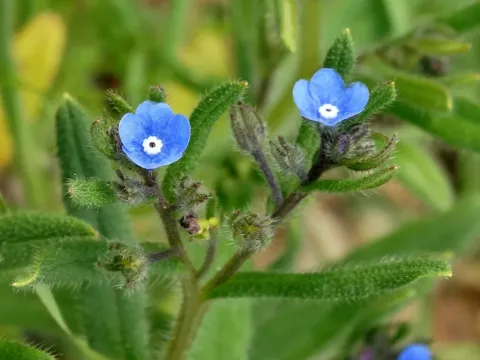
Gastrocotyle
Gastrocotyle
Gastrocotyle is a genus of herbaceous plants belonging to the Boraginaceae family. It is not considered an agricultural crop in the traditional sense and does not have established sowing schedules for cultivation.
What the section contains

Gastrocotyle
The life cycle of these plants is closely tied to seasonal rainfall patterns in arid and semi-arid regions. Seeds typically germinate during the cooler, wetter months of the year, ensuring adequate moisture for early seedling development.
In its natural habitat, the plant follows a biennial or annual habit, depending on the intensity and duration of the seasonal rains. This strategy allows the plant to survive extreme drought conditions.
Agricultural interest in this genus is limited to ecological studies and the analysis of its role in natural ecosystems, as it does not possess traits suitable for modern crop production.
Propagation occurs naturally via seed dispersal, with no human intervention required for the maintenance of populations in their native environmental niches.
Gastrocotyle thrives in well-drained, sandy, or stony soils that are typical of desert and semi-desert landscapes. It prefers substrates with low fertility, as it is highly efficient at nutrient extraction.
Climate requirements include high solar radiation and significant temperature variations between day and night. The plant is perfectly adapted to the hot and dry conditions of its native range.
Water requirements are minimal; the plant is xerophytic, meaning it possesses physiological adaptations to minimize water loss through transpiration during periods of high heat.
Soil structure is critical; compaction is generally avoided by the plant as it requires oxygen for its deep taproot system to function effectively during the growing season.
It occupies areas with minimal competition from other vegetation, often appearing in disturbed soils or open, sun-exposed terrains where light availability is optimal.
Major threats to Gastrocotyle include habitat destruction and the introduction of more aggressive, invasive species that compete for limited water and nutrient resources.
While the plant is quite hardy, fungal pathogens can affect it during exceptionally wet seasons, leading to root rot or foliage diseases that impede growth.
Insect pests are relatively rare due to the presence of trichomes—stiff, bristly hairs—on the surface of the stems and leaves, which serve as a physical deterrent against herbivores.
Agricultural activities, such as intensive tillage and herbicide application, pose the most significant risk to the plant in regions adjacent to or within cultivated agricultural lands.
Climate change, manifesting as prolonged droughts beyond the plant's evolutionary adaptation, poses a long-term threat to the survival of certain populations in highly sensitive zones.