
Alpine forget-me-not
Myosotis alpestris F.W. Schmidt
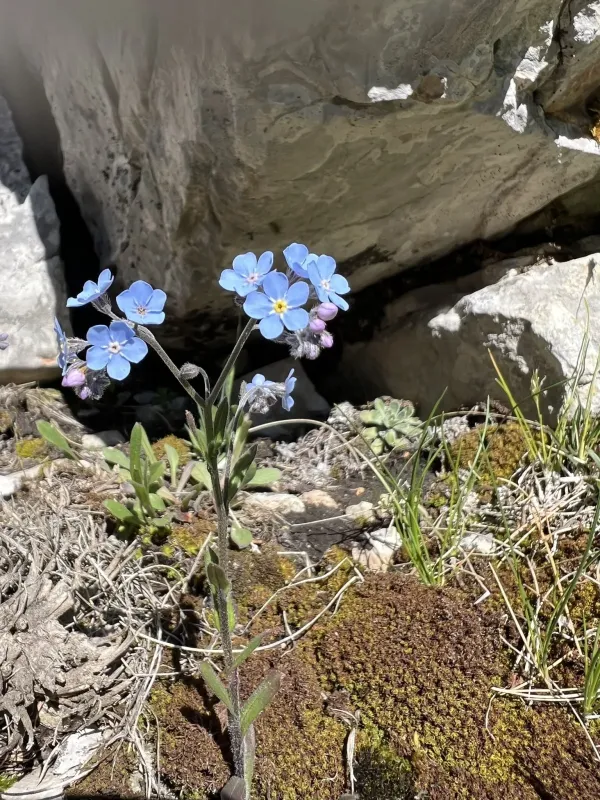
Description
Sowing dates
Alpine forget-me-not (Myosotis alpestris) is a herbaceous perennial belonging to the Boraginaceae family. While it is a true perennial, it is often treated as a biennial in garden cultivation to ensure the most vigorous and spectacular spring blooms.
Seeds should be sown directly into the ground in late June or early July. They require a well-prepared seedbed and should be covered with a thin layer of soil to maintain optimal moisture levels for germination.
For greenhouse cultivation, sowing in May allows for the development of sturdy rosettes before the planting season. Seedlings are pricked out when the first two true leaves appear, keeping spacing about 5–10 cm apart to allow room for growth.
Germination is most successful at temperatures between 18 and 20 degrees Celsius. The ideal time for transplanting to the permanent flower bed is late August or early September, giving the plants sufficient time to establish strong roots before frost.
The plant frequently regenerates through self-seeding, which makes it a low-maintenance choice for naturalistic gardens. Thinning is necessary if the seedlings become overcrowded to prevent competition for nutrients.
Growing requirements
The culture thrives in moderately moist, fertile, and well-drained soils with a neutral to slightly acidic pH. Avoiding stagnant water is critical, as the roots are highly susceptible to decay in waterlogged conditions.
Alpine forget-me-not prefers sunny locations but performs exceptionally well in partial shade, especially in warmer climates where the sun may be too intense. Shade helps to preserve the vibrancy of the blue flowers and prevents heat stress.
As a plant native to mountain ranges, it is accustomed to humid air and cooler temperature cycles. Gardeners should ensure consistent watering during dry periods, particularly when the flower buds are developing.
An application of compost or balanced mineral fertilizer in early spring is beneficial for sustained flowering. However, excessive nitrogen should be avoided, as it encourages dense vegetative growth at the expense of blossom production.
Adequate spacing, ideally 15 to 20 centimeters between plants, is essential to ensure good air circulation. This practice helps to reduce humidity around the foliage and minimizes the incidence of various fungal issues.
Main diseases and pests
Flea beetles are the primary insect pests affecting young seedlings, causing noticeable holes in the leaves. Quick application of insecticides is often necessary to prevent significant damage during the early growth stage.
Powdery mildew is a common fungal threat, characterized by a white powdery coating on the leaves and stems. To combat this, it is essential to ensure proper airflow and apply suitable fungicides if an outbreak occurs.
Slugs and snails can cause substantial damage during damp, cool weather by feeding on the tender shoots. Using physical barriers or bait traps is an effective way to protect the plants from these mollusks.
Root rot is typically associated with poor drainage and excessive irrigation. Ensuring that the planting site has a proper drainage layer can significantly reduce the risk of this persistent problem.
Aphids occasionally cluster on the buds and stems, draining sap and causing stunted or deformed flowers. Regular monitoring and the use of insecticidal soap or biological controls can effectively keep populations in check.