
Geiger tree
Cordia sebestena
Description
Growing requirements
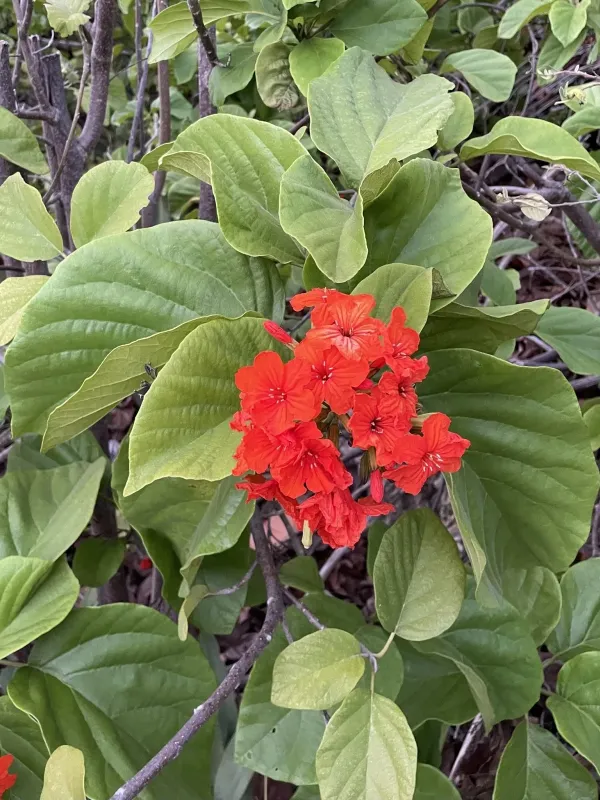
The Geiger tree (Cordia sebestena) is a small to medium-sized evergreen tree belonging to the Boraginaceae family. Originally native to the American tropics and the Caribbean, it is widely recognized for its vibrant, funnel-shaped orange-red flowers.
This species thrives in tropical climates and requires full sun exposure to reach its maximum blooming potential. It is highly intolerant of frost, meaning it can only be cultivated outdoors in regions where the temperature remains consistently above freezing.
The tree demonstrates exceptional tolerance to various soil types, including alkaline, sandy, and rocky substrates. However, it performs best when planted in well-drained soil, as it cannot withstand prolonged waterlogging in the root zone.
Agricultural management of the Geiger tree involves moderate irrigation during the establishment phase. Once mature, the tree exhibits a notable degree of drought tolerance, though it benefits from supplemental water during extended dry periods to maintain vigor.
Pruning is essential for maintenance, particularly to control the tree's growth habit and prevent crossing branches. A well-pruned specimen shows improved air circulation, which is vital for preventing the accumulation of humidity within the foliage.
Main diseases and pests
The Geiger tree is occasionally susceptible to infestations by scale insects and mealybugs. These sap-sucking pests can weaken the plant and lead to a significant decline in its overall health if not addressed through early detection.
Fungal leaf spot diseases are common, especially in humid or tropical environments with poor air movement. Proper spacing between trees and regular pruning of the interior canopy are effective methods for mitigating these issues.
Root rot remains a primary threat to younger trees planted in heavy, clay-rich, or poorly drained soils. Providing a loose, well-aerated soil structure is crucial for the long-term survival and stability of the plant.
Caterpillars can cause rapid defoliation if left unchecked. Integrated pest management strategies, such as using organic insecticides or encouraging natural predators, are recommended for maintaining the aesthetic value of the trees.
Overall, maintaining the health of the Geiger tree requires vigilant monitoring for pest activity. Ensuring the tree is placed in an optimal environment is the most sustainable way to reduce the frequency and severity of diseases.