


Prices in stores
from7.43 €per 1 l
pack from 14.26 € per 0.5 l
19 offers from 15 stores
Last Treatment Interval, Days
1
By type of action
Systemic herbicide
By Mode of Action
Selective herbicide
By Application Timing
Pre-emergence herbicide, Post-emergence herbicide
Your mark
0 votes
0% positive ratings
Store offers · 19 from 15 stores
19 offers in 15 stores — from 7.43 € per 1 l.
Available at: Agrariyam · Agrise · Agro-Time · agrofermerok-in-ua · Agrohim · Agrokonsultant · Agromaks2020 · Agropolex · Agroskill · Фазенда · Kurkul · Agronomist · Our World · Pitomniki-Shop · St-Agro
Prices are collected automatically from store websites and converted at the current exchange rate. Check the price and availability on the store website before ordering.
Description
Active ingredient:
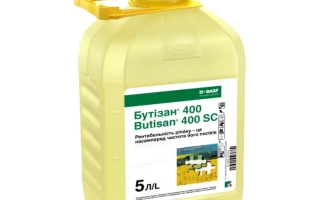
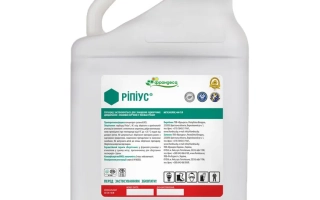
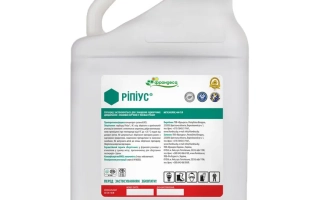
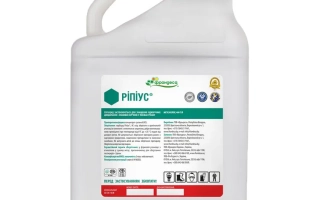
Metazachlor (400 g/l)
Base unit
5 l.
Rapeseed profitability — primarily its cleanliness.
Mode of action:
The product penetrates the plant through roots, hypocotyl, and cotyledons. Herbicidal effect on main weeds is manifested by disruption of root physiology. Initial signs are detected in inhibition of transpiration and root growth. After post-emergence application, weed growth stops first, then the weeds change color and die.
Advantages of the product:
— Extended application window (pre-planting, post-planting, pre-emergence, post-emergence);
— More than 90% efficacy against main rapeseed weeds;
— Easy harvesting and high crop quality after application.
SPECTRUM OF ACTION:
Blueweed; Veronica, species; Field bindweed; Galinsoga, species; Goosegrass; Goosegrass; Rough goosegrass; Medicinal fumitory; Common starwort; Quackgrass; Wide-leaved water-lily; Field pennycress; Self-seeding poppy; White wormwood; Annual meadow grass; Field forget-me-not; Field oat; Yellow hawkweed; Black nightshade; Shepherd's purse; Common chickweed; Field sorrel; Sticky dead-nettle; Field chickweed; Field barley; Wild radish; Chamomile, species; Ragwort, species; Field tormentil; Field horsetail; Chenopod, species; Upside-down clover; Field mustard; Purple dead-nettle; Field barley.
3rd class danger — low-risk pesticides for bees.
APPLICATION RECOMMENDATIONS:
BUTILZAN® 400 is applied at a rate of 1.5–2.0 l/ha after planting, up to emergence or in the cotyledon stage, up to the first true leaf of weeds.
However, in the first true leaf stage, only those weeds particularly sensitive to BUTILZAN® 400 can be treated, such as chamomile, starwort, purple dead-nettle, and Veronica. All other weed species, especially sticky dead-nettle, shepherd's purse, and field mustard, must be treated before the cotyledon stage.
Split applications are not recommended.
In dry years with slow and uneven weed emergence, early post-emergence application is recommended, as late-emerging weeds are eliminated by soil action.
A prerequisite for good rapeseed development and uniform weed emergence is a well-compacted seedbed.
Necessary conditions for optimal BUTILZAN® 400 efficacy:
Apply to well-prepared soil. Soil surface should not have clumps larger than 4–5 cm.
Herbicide application should be done on freshly cultivated soil (immediately after tillage) or directly before irrigation or rain.
Between-row treatments should not be conducted before 20–25 days.
The herbicide creates a good soil barrier. All subsequent soil surface treatments after application reduce its efficacy. Optimal results are achieved with sufficient and excess soil moisture. Adjustment of application rates is required based on soil type:
— on light sandy soils, apply 1.5–1.75 l/ha
— on loamy and clay soils — 1.75–2.0 l/ha.
On peat soils, due to high adsorption capacity, application of BUTILZAN® 400 is not advisable.
APPLICATION RECOMMENDATIONS FOR CROPS ON TRANSPLANTED CROPS:
Soil preparation before transplanting seedlings.
Transplant seedlings within 1–2 days.
Apply herbicide within the next 4 days.
Irrigate within 24 hours after herbicide application (the sooner the herbicide is applied and irrigation is performed after transplanting, the higher its efficacy, as the main target is germinating and swelling weed seeds)
Composition
Active ingredients
- Metazachlor гербицид Хлорацетамиды (Производные аминокислот)
Application
Used on crops
Against weeds
Annual broadleaf weeds
Annual grasses
Annual meadow grass
Anthemis
Barley
Barnyard grass
Black-grass
Black nightshade
Cleavers
Common chickweed
Common fumitory
Common hemp-nettle
Common poppy
Cornflower
Corn spurrey
Field forget-me-not
Field horsetail
Field pennycress
Lamiaceae
Large crabgrass
Perennial sow thistle
Prostrate knotweed
Redroot pigweed
Redshank
Resistant to 2,4-D
Rough knotweed
Scentless mayweed
Shepherd's purse
Spreading orache
Veronica
Wheat
Wild radish
Yellow foxtail
Specifications
| Last Treatment Interval, Days | 1 |
|---|---|
| By type of action | |
| By Mode of Action | |
| By Application Timing | |
| By application method | |
| Form of the preparation | |
| Application rate | From 2.0 - 3.0 L/ha |
| Maximum number of treatments | 1 |
| Danger Class | 3 |
| Catalog | Catalog → Herbicides, Desiccants |
| Manufacturer | BASF S.A |
| Country | Brazil |
No reviews yet. Be the first to share your experience.
Alternatives
Herbicides, Desiccants · similar preparations




See also
Often considered together with this product




Recently viewed
Products you’ve viewed on this site
Reviews