
Fringed Phacelia
Phacelia fimbriata
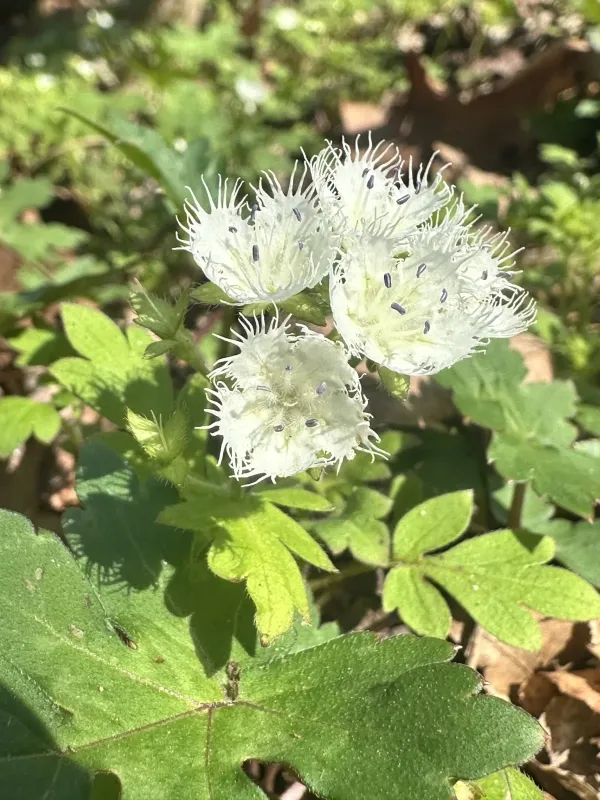
Description
Sowing dates
Fringed Phacelia (Phacelia fimbriata), belonging to the Hydrophyllaceae family, requires precise timing for planting to achieve optimal establishment. It is generally recommended to sow in early spring as soon as soil temperatures reach 5–8 degrees Celsius, allowing the seeds to germinate efficiently under cool conditions.
In regions with milder climates, late-autumn seeding is possible, which enables the plants to capitalize on early spring moisture. This practice helps the crop start growing earlier in the season, providing significant benefits for soil conditioning or early-season honey production.
The seeding rate is typically between 8 and 10 kg per hectare when using standard grain drills. It is essential to keep the planting depth shallow, around 1 to 2 cm, as the seeds are quite small and require proximity to the soil surface to emerge effectively without exhausting their stored energy.
After seeding, field rolling is highly recommended to ensure good seed-to-soil contact. This step is particularly vital in dry spring conditions, as it helps pull moisture up into the seed zone, promoting uniform germination and consistent density across the field.
The crop is known for its rapid early-stage growth, which allows it to naturally outcompete many common weed species. Within three to four weeks post-emergence, the foliage canopy develops enough to shade the soil, reducing water evaporation and improving micro-climatic conditions for the development of root systems.
Growing requirements
Fringed Phacelia is remarkably adaptable to various soil and climatic environments. It performs well on a wide range of soil textures, including sandy and loamy soils where nutrient availability might be limited, as it is efficient at extracting nutrients from the soil profile.
The plant exhibits high drought tolerance, making it a valuable option for regions prone to water scarcity. It also displays resilience to temperature fluctuations and can withstand light spring frosts without suffering major damage to its growth points, facilitating its use across different geographic regions.
While the plant thrives in bright, sunny locations, it can tolerate variable light conditions. However, full sun exposure is preferred to maximize bloom intensity, which is a key requirement for farmers utilizing the crop primarily as a source of nectar for pollinators and honeybees.
Agronomic management is straightforward, requiring minimal soil preparation such as light harrowing or cultivation. The crop does not require heavy fertilization, as it is proficient at mobilizing soil nutrients, thus contributing to the improvement of soil fertility for future crops in the rotation.
Incorporating Fringed Phacelia into a crop rotation cycle significantly enhances physical soil quality. Its fibrous root system effectively breaks up compacted soil layers, improving aeration and water infiltration, which creates a more favorable environment for the following primary crop's root development.
Main diseases and pests
Fringed Phacelia is known for its high level of natural resistance to most major diseases that plague agricultural crops. This makes it an ideal phytosanitary plant that can clean the soil and break infection cycles, reducing the need for chemical disease management in the farm’s rotation system.
During the early seedling stage, the crop may be susceptible to minor pest pressure from flea beetles or wireworms, especially if fields are infested with weeds. However, the rapid development of the green mass usually allows the crop to outgrow the threat before any significant damage occurs.
Excessive soil moisture and poor drainage can lead to root rot issues, so it is important to avoid planting in waterlogged lowlands. Ensuring well-drained conditions is the best preventive measure against soil-borne fungal pathogens that might thrive in damp, stagnant environments.
A critical consideration for farmers is that since the plant serves as a vital honey source, chemical insecticide applications during the flowering period are strictly prohibited. Protecting bees and other beneficial pollinators is essential for maintaining ecological health and supporting local biodiversity.
Biological protection combined with effective agronomic practices allows for high-quality production without the reliance on costly pesticides. Fringed Phacelia is thus a highly suitable choice for organic or low-input farming systems where long-term soil health is a priority.