

Description
Growing requirements
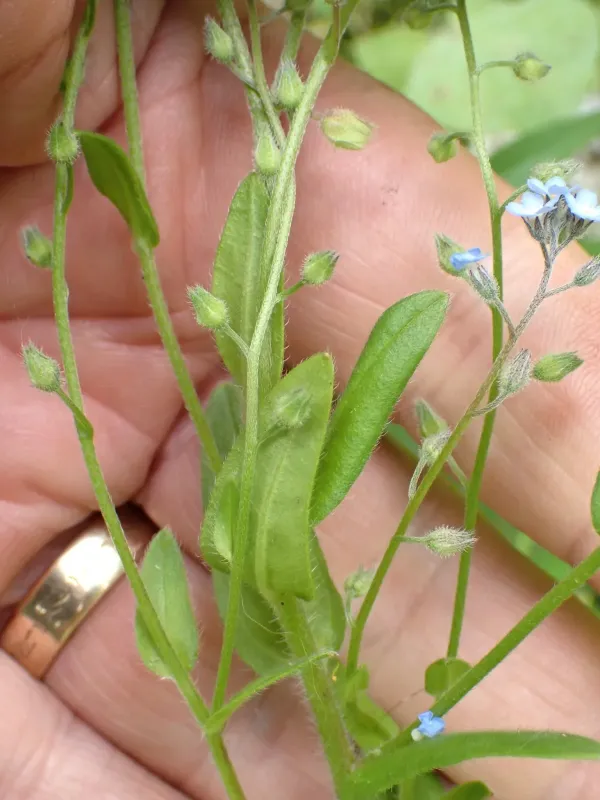
The field forget-me-not (Myosotis arvensis) is an annual or biennial herbaceous plant belonging to the Boraginaceae family. It is widely distributed across temperate regions of the Northern Hemisphere, often found in fields, meadows, and disturbed soil.
Botanically, it is distinguished by a branched, hairy stem reaching up to 40 cm in height, with small, lanceolate, alternate leaves. The plant features characteristic blue flowers with a yellow center, which are key indicators for identification in the field.
It prefers well-drained, nutrient-rich soils but shows high adaptability to various substrates, including heavy clays and light sandy soils. It is particularly common in agricultural areas where soil tillage is frequent.
As a field weed, it competes with primary crops for soil nitrogen and water. While it does not provide direct economic benefits as a cultivated crop, its presence is a strong signal of soil moisture levels and soil structure condition.
In terms of habitat, the species thrives in sun-exposed areas and can form dense patches that interfere with early-stage crop development if not properly managed through competitive crop spacing.
Main diseases and pests
The main threat posed by this weed is its massive seed production. A single plant can produce thousands of seeds that remain viable in the soil seed bank for years, making long-term control difficult.
Pathogen dynamics involve the species serving as an alternate host for several fungal diseases, including powdery mildew and various rust fungi that can infect cereal and vegetable crops.
Common insect pests like aphids frequently colonize the plant. This makes the weed a potential vector point for virus transmission to neighboring crops within the field ecosystem.
Mechanical control methods, such as timely spring harrowing and post-harvest stubble cultivation, are effective at reducing the population before the plant reaches its seed-setting stage.
Chemical control often involves post-emergence herbicides. Choosing the right timing is essential, as older plants develop a thicker coating of hairs on their stems, which can reduce the efficacy of contact herbicides.
Reference
Connections · Field forget-me-not
Most often together:
Marketplace
Products · 31


Terramidin
Nanjing No.1 Pesticide Factory of Red Sun Group Co., Ltd.
Herbicides
0
0
1 offer
32.06 €per pack
Buy




Bentagran AS
Nanjing No.1 Pesticide Factory of Red Sun Group Co., Ltd.
Herbicides
0
0
No offers
—
Details


