
Water forget-me-not
Myosotis scorpioides L.
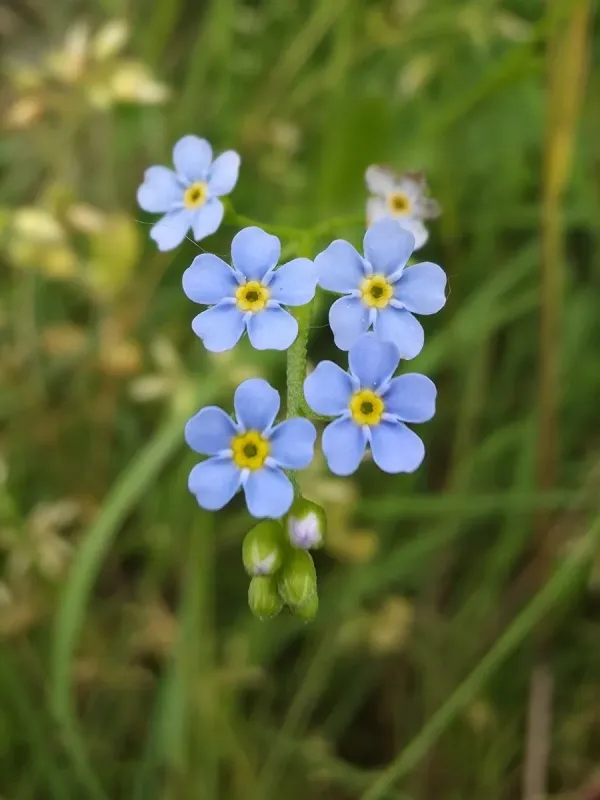
Description
Growing requirements
Water forget-me-not (Myosotis scorpioides L.) is a perennial herbaceous plant belonging to the Boraginaceae family. It is native to wetlands, stream banks, and marshes across Europe and parts of Asia, thriving in environments where water is readily available.
The plant is characterized by its branching stems that can grow up to 50 cm in length. Its lanceolate leaves are typically covered in fine, soft hairs. The flowers are notable for their bright blue petals with a central yellow ring, appearing from late spring through summer.
To cultivate this species successfully, one must replicate its natural habitat. It requires consistently moist, water-retentive soil and is often found growing in shallow water at the margins of ponds or along the muddy banks of slow-moving streams.
The ideal planting site provides partial shade, which prevents the soil from drying out rapidly. However, the plant is adaptable and can tolerate full sun provided that the root system remains constantly hydrated throughout the growing season.
In landscaping, the water forget-me-not is highly valued for its ability to soften the edges of water features. It serves as an excellent groundcover for boggy areas, offering aesthetic appeal while helping to stabilize the soil along water edges.
Main diseases and pests
Slugs and snails represent the primary pest threat to the water forget-me-not. These mollusks are attracted to the lush, damp foliage and can cause significant cosmetic damage by eating holes in the leaves during the night or overcast weather.
Powdery mildew is the most frequent fungal disease affecting this species. It appears as a dusty white coating on the leaves and stems, usually occurring when air circulation is poor or humidity levels are extremely high for an extended period.
Rust diseases, characterized by orange or reddish-brown spots on the leaves, can also impact the plant's health. While usually not fatal, severe infestations can significantly reduce the vitality and overall blooming capacity of the plant.
Root rot can become an issue if the water becomes stagnant or if the plant is grown in soil that lacks proper drainage despite being wet. Maintaining water quality and ensuring slight movement in ponds can mitigate this risk.
Integrated pest management, including regular inspection and the removal of severely infected leaves, is the best strategy. Chemical controls should be avoided near water bodies to protect the local aquatic ecosystem and biodiversity.