


Prices in stores
from10.06 €per 1 l
pack from 1.73 € per 100 ml
20 offers from 19 stores
Maximum number of treatments
3
By type of action
Systemic herbicide
By application method
Foliar herbicide, Soil herbicide
By Mode of Action
Selective herbicide
Your mark
1 vote
0% positive ratings
Store offers · 20 from 19 stores
20 offers in 19 stores — from 10.06 € per 1 l.
Available at: AGRAR · agrocenterinua-0747f5 · Agrodostatok · Agrodrug · Agrokonsultant · Agromagazin · agropartner21-com-ua · Agroretail · Baza Lubny · dimsad-gorod-com · Фазенда · ФОРСАГРО · Гектар · LNZ web · Optoman · Сад-Город
Prices are collected automatically from store websites and converted at the current exchange rate. Check the price and availability on the store website before ordering.
About product
A reliable three-component formula for controlling a wide range of weeds in beet crops.
Description
Three-Component Protection for Fodder and Sugar Beet
Weed control efficiency in beet crops directly depends on the precision of the chosen chemical. Beta-Guard, produced by Agricopter Asia Limited, is a classic systemic composition of three active ingredients (desmedipham, phenmedipham, and ethofumesate), which remains the gold standard in protecting this crop.
Why Choose Beta-Guard?
- Synergy of components: The combination of carbamates and ethofumesate provides not only foliar but also partial soil action. This is crucial for controlling the second flush of weeds during the early growing season.
- Selectivity: The herbicide acts specifically on target weeds, causing no stress to the beet crop when application rates (0.5–1.0 l/ha) are strictly followed.
- Wide Spectrum: Beta-Guard shows high efficacy against the most problematic dicotyledonous weeds, including lamb's quarters, field mustard, shepherd's purse, wild radish, and black nightshade.
The primary strength of this product lies in its flexibility. As a post-emergence herbicide, it allows agronomists to make decisions based on actual weed emergence rather than prophylactic spraying. The emulsifiable concentrate formulation ensures excellent compatibility in tank mixes, allowing you to combine it with other pesticides to broaden the impact spectrum.
Application Recommendations
For optimal results, split application is highly recommended. While the regulations allow up to 3 treatments, the most effective strategy remains applying the product during the cotyledon stage of the weeds, when their sensitivity to carbamates is at its peak. Please note that the product is classified as a Class 3 hazard, requiring standard safety precautions during sprayer operation.
Who is Beta-Guard best for? Primarily, it is an essential tool for intensive farming operations looking for a reliable product that balances foliar impact with residual soil protection. It is a proven solution for professionals who prioritize crop safety over questionable savings from low-quality generics.
Composition
Active ingredients
- Desmedipham гербицид Карбаматы
- Ethofumesate гербицид Производные фурана; бензофураны
- Phenmedipham гербицид Карбаматы
Application
Used on crops
Against weeds
Annual broadleaf weeds
Annual grasses
Black nightshade
Cleavers
Common chickweed
Common fumitory
Common poppy
Common purslane
Common ragweed
Cornflower
Corn spurrey
Field forget-me-not
Field pansy
Field pennycress
Hemp-nettle
Jimsonweed
Knotweed
Lamiaceae
Redroot pigweed
Saltbush
Scented mayweed
Seseli
Shepherd's purse
Small Nettle
Sunflower
Veronica
Wild mustard
Wild radish
Specifications
| Maximum number of treatments | 3 |
|---|---|
| By type of action | |
| By application method | |
| By Mode of Action | |
| By Application Timing | |
| Form of the preparation | |
| Application rate | From 0.5 - 1.0 L/ha |
| Danger Class | 3 |
| Registration year | 2009 |
| Catalog | Catalog → Herbicides, Desiccants |
| Manufacturer | Agricopeer Asia Limited |
| Legal data |
Show · 2
|
| Country | China |
No reviews yet. Be the first to share your experience.
Alternatives
Herbicides, Desiccants · similar preparations



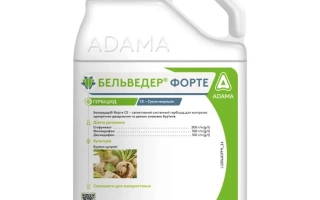
Belveder Forte
Finkemü Schwebda, F.GmbH, Germany, Member OF Group
0959 9 offers
16.61 €per 1 l ≈ 846 ₴


See also
Often considered together with this product




Recently viewed
Products you’ve viewed on this site
Reviews