
Alfa-Prometrin
Zhejiang Zhongshan Chemical Industry Group Co., Ltd.
Herbicides
1
1
20 offers
4.92 €per pack
Buy

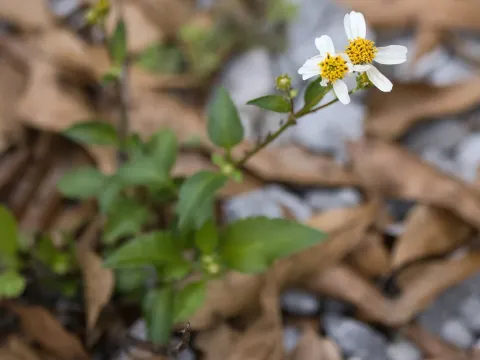
Bidens L.
The cultivation of Bidens, typically known as beggarticks, begins with planting in early spring once the soil temperature consistently reaches 8–10°C. In temperate regions, this usually falls within late April, ensuring the soil has retained enough moisture to support rapid germination.
 Three-lobe beggarticks
Bidens tripartita L.
5 products
Three-lobe beggarticks
Bidens tripartita L.
5 products
 Apache Beggarticks
Bidens ferulifolia (Jacq.) DC.
Apache Beggarticks
Bidens ferulifolia (Jacq.) DC.
 Beggar-ticks
Bidens pilosa L.
Beggar-ticks
Bidens pilosa L.
 Bidens odorata
 Cav.
Bidens odorata
Bidens odorata Cav.
 Bidens subalternans
 DC.
Bidens subalternans
Bidens subalternans DC.
 Bidens triplinervia var. macrantha
Bidens triplinervia Kunth var. macrantha (Wedd.) Sherff
Golden tickseed
Bidens aurea (Aiton) Sherff
Hybrid Beggarticks
Bidens triplinervia x Bidens ferulifolia
Bidens triplinervia var. macrantha
Bidens triplinervia Kunth var. macrantha (Wedd.) Sherff
Golden tickseed
Bidens aurea (Aiton) Sherff
Hybrid Beggarticks
Bidens triplinervia x Bidens ferulifolia
 Smooth beggarticks
Bidens laevis (L.) B.S.P.
Three-veined beggar-ticks
Bidens triplinervia Kunth
Smooth beggarticks
Bidens laevis (L.) B.S.P.
Three-veined beggar-ticks
Bidens triplinervia Kunth
 White beggarticks
Bidens alba (L.) DC.
White beggarticks hybrid
Bidens alba (L.) DC.x Bidens odorata Cav.
White beggarticks
Bidens alba (L.) DC.
White beggarticks hybrid
Bidens alba (L.) DC.x Bidens odorata Cav.
 White beggarticks hybrid
Bidens alba x Bidens triplinervia
White beggarticks hybrid
Bidens alba x Bidens triplinervia




Seeds of Bidens remain viable for up to three years; however, for commercial medicinal production, growers are advised to use fresh, high-quality seeds to ensure uniform stand density. Fall planting is also an option in certain climates to allow natural stratification of the seeds.
The recommended seeding rate is approximately 10–12 kilograms per hectare. Sowing is generally conducted in rows with spacings of 45–60 cm, which allows for mechanical weeding and proper air circulation between the plants throughout the vegetative period.
Seeds should be covered with a thin layer of soil, not exceeding 1.5–2 cm in depth. Bidens seeds require sufficient moisture during the first two weeks to successfully establish roots. Proper compaction of the seedbed immediately after sowing is beneficial to improve soil-to-seed contact.
After the seedlings emerge, it is critical to ensure the field is free of weeds. Bidens grows relatively slowly in the early stages, making it highly susceptible to competition from fast-growing weeds that can suppress the crop and reduce overall yield quality.
Bidens belongs to the Asteraceae family and is naturally adapted to moist environments. In agricultural settings, it requires high soil moisture levels and thrives in rich, loamy, or alluvial soils. It does not tolerate prolonged drought, which can significantly stunt growth.
The ideal temperature for active development ranges from 18°C to 25°C. Bidens prefers locations with good light exposure, which promotes the accumulation of essential bioactive compounds in the leaves, a key requirement for the pharmaceutical-grade raw material market.
Organic fertilization is highly recommended for Bidens. Incorporating well-rotted compost or manure improves the soil's structure and its water-holding capacity, which directly supports the plant's moisture requirements during the summer heat.
The crop requires regular inter-row cultivation to keep the soil loose and prevent crust formation. Proper soil aeration is essential for the healthy development of the root system, which in turn influences the vigor of the above-ground biomass production.
Farmers should avoid continuous cropping on the same plot to prevent the buildup of soil-borne pathogens. A crop rotation cycle of at least 3 to 4 years is recommended to maintain soil fertility and reduce the risk of disease incidence in Bidens fields.
Bidens is susceptible to powdery mildew, particularly in conditions of high humidity and poor ventilation. The fungus manifests as a white, powdery coating on the foliage, which can severely impact the quality of the raw material collected for medicinal use.
Root rot is another common issue in waterlogged fields, especially during excessively rainy seasons. To mitigate these risks, growers should ensure proper field drainage and avoid over-dense planting, which restricts airflow and creates a humid microclimate around the plants.
Insect pests, such as aphids, can cause significant damage by feeding on the sap of young stems and flower buds. Their activity often leads to leaf curling and growth stagnation, necessitating close monitoring of the crop, especially during the early stages of development.
Integrated pest management strategies are preferred over heavy chemical use, as medicinal herbs have strict quality standards regarding residue levels. Biological control methods and maintaining strong, healthy plants are the primary lines of defense against insect infestations.
If disease patches are detected, the affected plants should be removed and disposed of away from the main field to stop the spread of infection. Consistent field monitoring and sanitation practices are vital to achieving a clean and high-quality harvest at the end of the season.
The harvest timing is the most critical factor in Bidens production. The plants should be harvested during the peak budding stage or at the very beginning of the flowering cycle, as this is when the concentration of medicinal compounds is at its maximum.
Harvesting is performed by mechanical mowing of the top sections of the plants, typically leaving about 15–20 cm of the stem above the ground. It is essential to exclude woody lower stems from the harvest to maintain the required concentration of active ingredients.
The harvested biomass must be transported to the drying facility immediately. Leaving the cut plants in heaps can cause rapid self-heating and fermentation, which destroys the delicate essential oils and reduces the therapeutic value of the raw material.
Drying should take place in a shaded, well-ventilated area or in mechanical dryers at temperatures not exceeding 40°C. Excessive heat will cause the evaporation of volatile components, while insufficient drying can lead to mold development during subsequent storage.
Once dried, the raw material should be stored in a cool, dry, and dark environment to preserve its quality. Proper storage ensures that the Bidens retains its natural color and chemical potency until it is processed for further pharmaceutical or herbal applications.