
Apache Beggarticks
Bidens ferulifolia (Jacq.) DC.
Description
Sowing dates
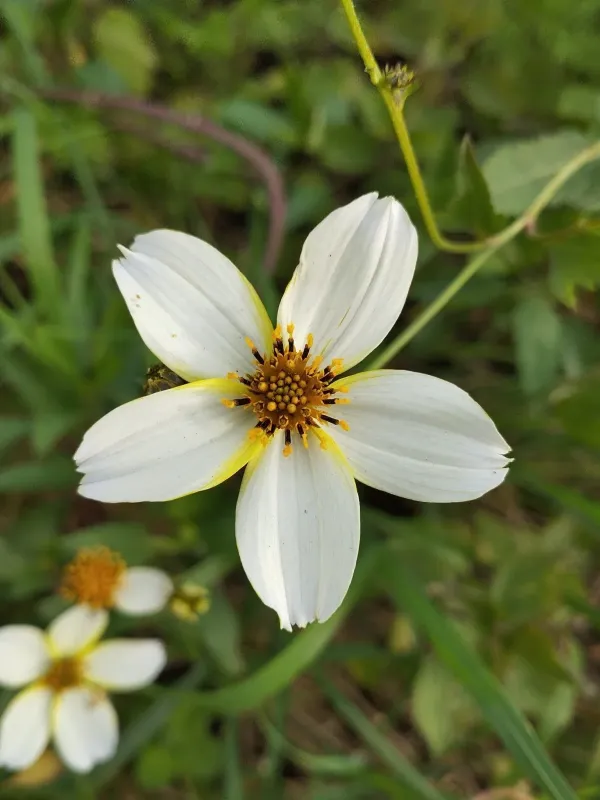
Apache Beggarticks (Bidens ferulifolia) is a fast-growing, vigorous plant widely cultivated in hanging baskets and flower beds for its bright yellow flowers.
Seeds should be sown indoors in late winter or early spring using a sterile, well-draining seed starting mix to ensure the best germination results.
Maintain a constant temperature of approximately 20 degrees Celsius and provide bright light, as the seeds require exposure to light to germinate properly.
Seedlings are ready for transplanting after they develop at least two sets of true leaves and all danger of frost has completely passed in the outdoor environment.
For container gardening, place the plants in containers with sufficient drainage holes to prevent the accumulation of excess water around the root system.
Growing requirements
Native to the regions of Mexico and the Southwestern United States, this species belongs to the Asteraceae family and thrives in full sun conditions.
The plant requires a rich, loamy soil with excellent drainage properties to perform at its best, especially when grown in containers where soil volume is limited.
Consistent moisture is key; the plant should be watered deeply whenever the top layer of the soil feels dry, but avoid waterlogging the roots at all times.
To encourage continuous blooming throughout the season, it is recommended to apply a balanced liquid fertilizer every two weeks during the active growth period.
Deadheading or trimming back overgrown stems helps the plant maintain a compact, bushy shape and directs energy into producing new floral buds.
Main diseases and pests
The most common pests affecting Apache Beggarticks are aphids and spider mites, which can quickly colonize the succulent stems of the plant.
Powdery mildew is a common fungal issue that arises during periods of high humidity or poor air circulation, particularly in dense, overcrowded plantings.
To mitigate pest and disease risks, ensure proper spacing between plants and avoid overhead watering which leaves the foliage constantly wet.
In case of severe infestations, use horticultural soaps or targeted systemic insecticides labeled for use on ornamental flowering plants.
Regular monitoring of the undersides of the leaves is essential for early detection of pests, allowing for prompt intervention before the damage becomes extensive.