Description
Sowing dates
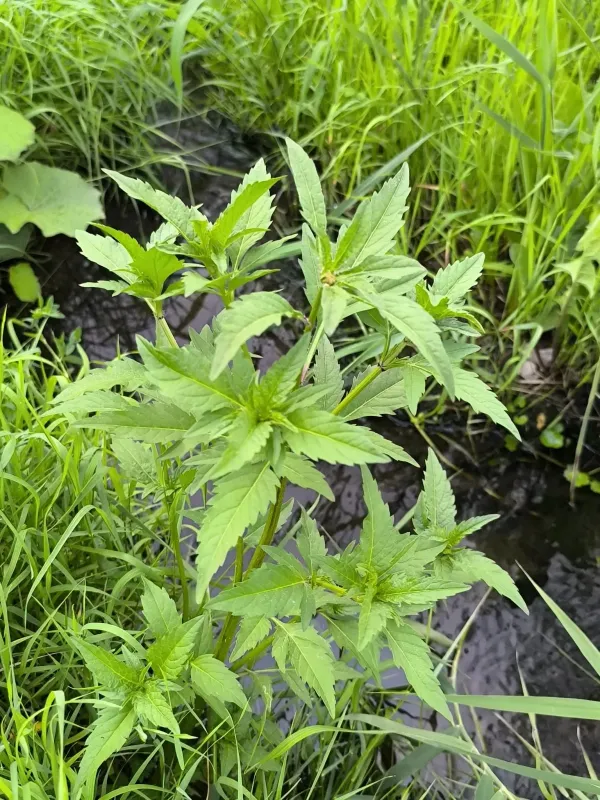
Bidens tripartita is an annual herbaceous plant of the Asteraceae family. It is widely recognized both as a medicinal plant and as a common wetland weed in agricultural fields.
For cultivation, seeds are sown in early spring as soon as soil temperatures reach approximately 8-10 degrees Celsius. The species requires consistent moisture for successful germination.
Sowing depth should be shallow, generally between 1 and 2 centimeters, to ensure the small seeds are not buried too deeply to emerge effectively.
Row spacing of 45-60 centimeters is recommended for mechanical field maintenance. Proper spacing prevents overcrowding and encourages even growth of the medicinal biomass.
The plant demonstrates high reproductive potential, so controlling plant density is crucial to ensure optimal development and harvest quality.
Growing requirements
This species is a hygrophyte, meaning it thrives in wet and marshy habitats. It requires constant soil moisture and is highly sensitive to drought conditions.
It prefers fertile soils rich in organic matter, such as alluvial or peat-based soils. It can tolerate slight soil acidity but performs best in neutral conditions.
Full sunlight is essential for the plant's development and for maximizing the accumulation of its therapeutic phytochemical compounds.
Geographically, it has a broad range across temperate Eurasia and North America, adapting well to various climates where high humidity is available.
The species is highly competitive in its natural habitat, quickly colonizing wet areas and outcompeting less aggressive vegetation.
Main diseases and pests
Common diseases affecting the plant include powdery mildew and fungal stem rots, which often occur under conditions of poor air circulation and excessive humidity.
Pests such as aphids and spider mites can infest the foliage, particularly during dry spells, requiring careful monitoring to maintain raw material quality.
To mitigate disease risks, farmers must avoid high-density sowing and ensure good drainage in field sections where water might stagnate.
The use of synthetic pesticides is generally discouraged for medicinal plant cultivation, making cultural practices the primary form of protection.
Timely identification of pest infestations is vital, as the plant's rapid growth cycle means that significant damage can occur within a short timeframe.
Harvesting
The harvesting stage is critical, specifically during the budding phase before the flowers fully open, to ensure the highest concentration of active ingredients.
The top 15 centimeters of the flowering shoots are typically cut. Mechanical harvesting is possible with calibrated equipment adjusted to the specific stem height.
Immediate processing is necessary after harvesting to prevent spoilage. The plant material is sensitive to heat and moisture accumulation in piles.
Drying is performed in thin layers under shade or in temperature-controlled chambers (not exceeding 45 degrees Celsius) to preserve medicinal properties.
Once dried, the plant material should be stored in cool, dark, and dry conditions to prevent the loss of essential oils and other active compounds.
Reference
Connections · Three-lobe beggarticks
Most often together:
Marketplace
Products · 5


Trifluralin 480 g/L, herbicide
F.A.GAN Chemical Manufacturers Ltd. Israel, member
Herbicides
0
0
3 offers
9.93 €per 1 l
Buy