
Smooth beggarticks
Bidens laevis (L.) B.S.P.
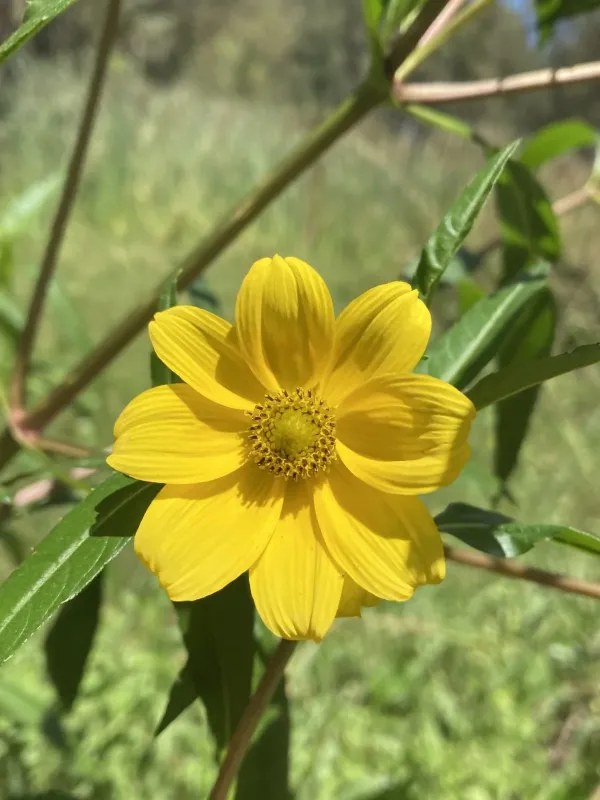
Description
Growing requirements
Smooth beggarticks (Bidens laevis) is a perennial herbaceous plant belonging to the Asteraceae family. Known for its distinct yellow flower heads, this species is native to wetland environments and thrives in areas with consistent moisture, such as pond margins and marshes.
Botanically, the plant features erect, often branching stems and smooth, lance-shaped leaves. Its root system is fibrous and highly efficient at nutrient uptake in water-saturated soils, allowing the plant to establish itself firmly in riparian zones or mudflats.
Regarding climatic preferences, Bidens laevis requires a long growing season with ample warmth to reach its full size. It is sensitive to extreme frost and performs best in temperate climates where the seasonal transition does not threaten its vegetative structures.
The soil requirements are specific: the plant demands high levels of organic matter and good water retention. While it can adapt to various soil types, its growth is most vigorous in nutrient-dense alluvial or silty soils found in flooded or periodically submerged areas.
Agricultural management requires careful water monitoring. While it is an aquatic-adjacent species, it benefits significantly from full sun exposure, which ensures the development of healthy, dense foliage and abundant floral display during the late summer flowering period.
Main diseases and pests
Aphids are the most common pests affecting this species. By feeding on the sap of tender new leaves and flower buds, they can stunt growth and transmit viral diseases if infestations are not controlled promptly in the early stages.
Fungal pathogens such as powdery mildew can be a significant threat, especially during seasons with high humidity and poor air circulation. The characteristic white fungal growth on the foliage impairs photosynthesis and can lead to early senescence.
Root rot, specifically caused by soil-borne pathogens like Pythium or Phytophthora, is a concern when water drainage is inadequate despite the plant's preference for moisture. Ensuring some level of water movement helps mitigate this risk.
Leaf miners can occasionally damage the leaves by creating tunnels, which weakens the plant's resistance to other stressors. Integrated pest management (IPM) strategies, including encouraging natural predators, are recommended for maintaining plant health.
Regular sanitation of the growing site is essential. Removing debris at the end of the season prevents the overwintering of pests and fungi, providing a clean start for the next generation of plants and ensuring better overall crop quality.