
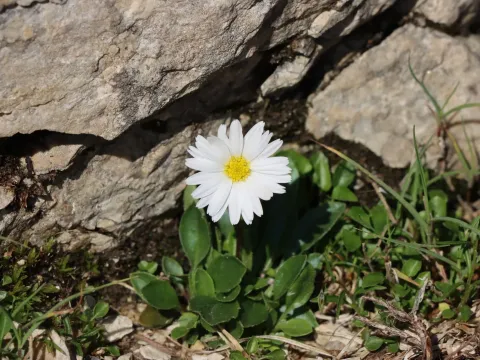
Bellidiastrum
Bellidiastrum
Sowing Bellidiastrum (Bellidiastrum michelii) is most successful when performed in late autumn, allowing the seeds to undergo natural stratification over the winter period. This process is essential for breaking the seed dormancy and ensuring a high germination rate in early spring.
What the section contains

Bellidiastrum
For spring sowing, seeds require artificial stratification in a cold environment for 4 to 6 weeks. This mimics winter conditions and is necessary to trigger the germination mechanism, otherwise, the germination process will be highly irregular and slow.
Seeds should be sown on the surface of a light, well-draining substrate, as they require light to germinate effectively. It is recommended to cover them with a very thin layer of fine sand to prevent them from drying out while ensuring they remain exposed to light.
The optimal temperature range for germination is between 15 and 18 degrees Celsius. Maintaining consistent but moderate soil moisture is crucial, as the seeds and young seedlings are sensitive to both drought and excessive waterlogging of the germination medium.
Pricking out should be carried out once the seedlings have developed their first pair of true leaves. Carefully transferring them to individual pots allows for stronger root system development before transplanting them to their permanent location in the garden.
Bellidiastrum is a member of the Asteraceae family, native to alpine meadows and limestone mountain slopes. Consequently, the plant thrives in conditions with high light intensity, although it appreciates some protection from the harsh midday sun in warmer regions.
The soil must be well-drained, porous, and preferably rich in calcium, reflecting its natural limestone habitat. Heavy, clay-based soils that retain too much water are unsuitable and often lead to root rot if drainage is not significantly improved.
This alpine species is highly frost-tolerant and well-adapted to the cold winters of its native mountain range. In gardens, it requires little protection, although a light mulch layer can help stabilize soil temperature during winter months without persistent snow cover.
During the active growing season, regular moderate watering is required to keep the soil moisture consistent. While the plant can tolerate short dry spells, sustained drought will inhibit flowering and reduce the overall vigor of the plant, especially during summer.
Fertilization should be handled with caution, as high levels of nitrogen encourage excessive foliage growth rather than flowering. A balanced, low-nitrogen mineral fertilizer applied sparingly in early spring is usually sufficient to support healthy growth and blooming.
Fungal diseases, particularly powdery mildew, are the primary health concern for Bellidiastrum in garden settings. Good air circulation around the plants, achieved through correct spacing and thinning, is the most effective preventative measure against fungal outbreaks.
Root rot is a common issue caused by poor drainage or overwatering. If the substrate remains too wet, oxygen depletion in the soil promotes the growth of pathogens that destroy the roots, eventually causing the entire plant to wilt and die prematurely.
Slugs and snails can pose a significant threat to young plants, often causing severe damage to foliage and preventing the plant from establishing itself properly. Monitoring and using physical barriers or organic pest control methods is recommended during the early growth stage.
Aphids may occasionally infest flower buds, extracting sap and causing deformation of the blooms. If an infestation occurs, it should be treated promptly with environmentally friendly insecticidal soaps or specific horticultural oils to maintain plant health.
Maintaining a clean garden environment is vital for long-term health. Removing plant debris from around the base of the plant reduces the risk of overwintering pathogens and pests, ensuring the Bellidiastrum stays healthy throughout the growing season.