
White beggarticks
Bidens alba (L.) DC.
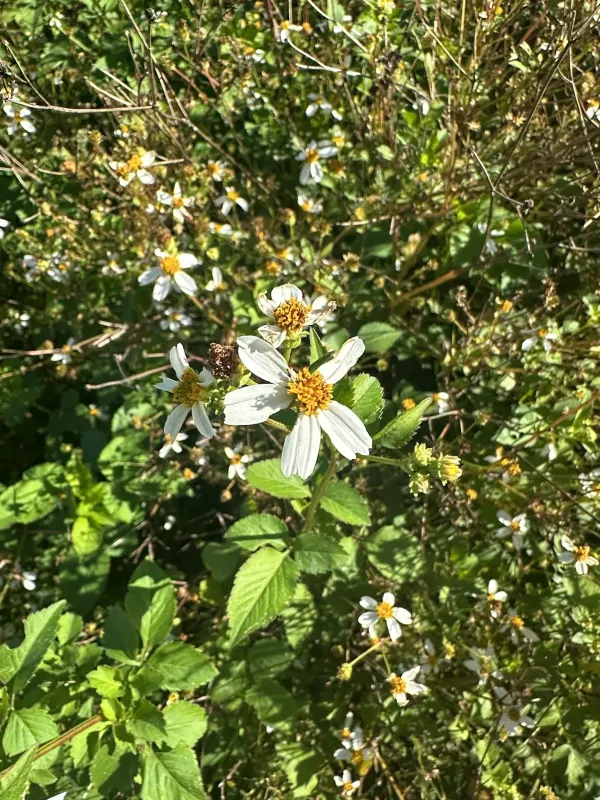
Description
Growing requirements
Bidens alba, commonly known as white beggarticks, is a plant species belonging to the Asteraceae family. It is widely recognized for its medicinal applications and its role as a significant nectar source in warm climates.
The plant thrives in full sun conditions, showing remarkable resilience to heat and varying moisture levels. It is highly adaptable to diverse soil types, ranging from sandy to clay loam, although it prefers well-drained fertile soils for optimal growth.
Regarding climate, this species requires a frost-free environment to complete its lifecycle effectively. While it is a perennial in its native tropical range, it is often treated as an annual crop in cooler latitudes.
Agronomic management involves providing adequate spacing between rows to facilitate airflow, which is critical for reducing humidity levels around the foliage and stems.
The plant is highly valued in apiary management as it provides an extended flowering season, which is essential for maintaining strong honeybee colonies throughout the year.
Main diseases and pests
The primary pests affecting white beggarticks include aphids and spider mites, which can cause stunted growth if infestations are not addressed during the early stages.
Common diseases such as powdery mildew may occur when the plants are grown in overcrowded conditions or in environments with poor air circulation.
Root rot pathogens are a potential threat when the soil remains waterlogged for extended periods, necessitating careful irrigation management.
Effective management includes regular field scouting and the use of integrated pest control methods that do not harm the local population of beneficial pollinators.
Cultural practices such as removing infected debris at the end of the season can significantly reduce the overwintering potential of common field pathogens.