
Bidens subalternans
Bidens subalternans DC.
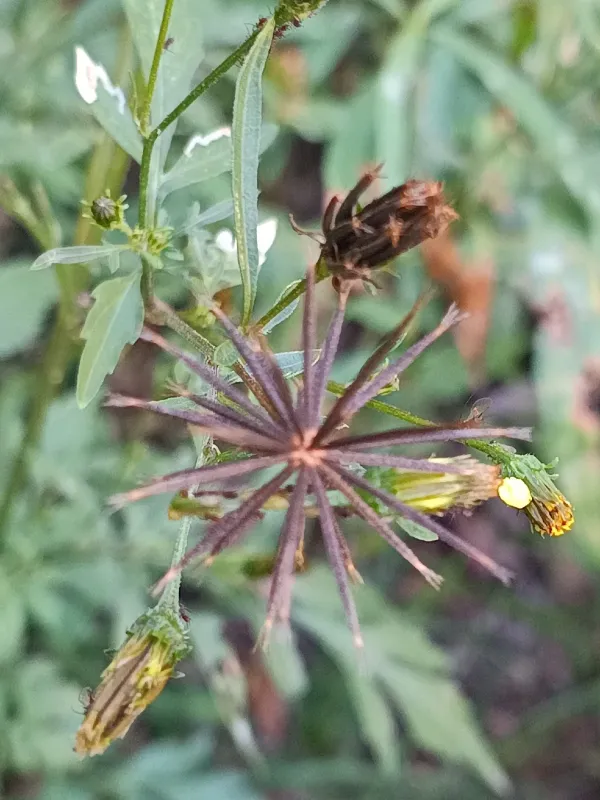
Description
Growing requirements
Bidens subalternans is a persistent annual plant belonging to the Asteraceae family. Known for its adaptability, this species is frequently encountered as a weed in various cropping systems across both tropical and temperate zones.
The plant originates from South America but has successfully established itself as an invasive species in numerous countries globally. Its ability to thrive in disturbed soils makes it a common fixture in agricultural fields, roadsides, and waste areas.
Optimal growth for this species occurs in well-lit, nutrient-rich environments with consistent moisture. It exhibits vigorous growth early in the season, allowing it to compete effectively with primary crops for available soil resources.
Botanically, it is characterized by its pinnately divided leaves and distinct achenes, which are equipped with barbed bristles. These morphological features are adaptations for efficient seed dispersal via animals and machinery.
Environmental conditions play a crucial role in its lifecycle. Given its tropical origins, the plant shows strong performance during warm summer months, often producing several generations in a single growing season if conditions remain favorable.
Main diseases and pests
In agricultural settings, Bidens subalternans poses a significant threat to crop productivity. It competes aggressively for light, water, and nutrients, often resulting in severe yield losses if not managed during the early stages of crop development.
A major concern is the species' potential to develop resistance to common herbicide groups, including ALS inhibitors. This development necessitates the implementation of Integrated Weed Management (IWM) programs to prevent population dominance.
The plant serves as a host for various diseases and pests that can impact major crops such as soybeans, sunflowers, and corn. Managing the weed population is therefore essential for reducing the overall pest pressure in the field.
Mechanical control measures must be applied precisely. Due to the high seed bank persistence, shallow cultivation may not be sufficient to eliminate the weed, often requiring a combination of cultural practices and chemical interventions.
Management strategies should focus on preventing seed set. Early detection and targeted herbicide applications in the pre-flowering phase are considered the most effective methods to limit the spread of this invasive species.