
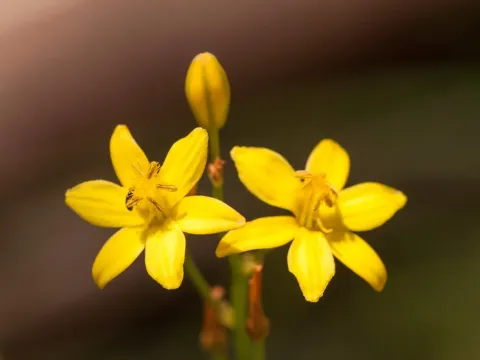
Bulbine
Bulbine
Bulbine seeds should be sown in a well-prepared, loose substrate during the spring when stable warm temperatures are achieved. A soil temperature between 20 and 25 degrees Celsius is optimal for germination.
What the section contains
 Bulbine alooides
Bulbine alooides
Bulbine alooides
 Bulbine bruynsii
Bulbine bruynsii
Bulbine bruynsii
 Bulbine bulbosa
Bulbine bulbosa
Bulbine bulbosa
 Bulbine capitata
Bulbine capitata
Bulbine capitata
 Bulbine fallax
Bulbine fallax
Bulbine fallax
 Bulbine glauca
Bulbine hallii
Bulbine hallii
Bulbine glauca
Bulbine glauca
Bulbine hallii
Bulbine hallii
 Bulbine haworthioides
Bulbine haworthioides
Bulbine haworthioides
 Bulbine inflata
Bulbine inflata
Bulbine inflata
 Bulbine latifolia
Bulbine lolita
Bulbine lolita
Bulbine latifolia
Bulbine latifolia
Bulbine lolita
Bulbine lolita
 Bulbine margarethae
Bulbine margarethae
Bulbine margarethae
 Bulbine mesembryanthemoides
Bulbine mesembryanthemoides
Bulbine mesembryanthemoides
 Bulbine narcissifolia
Bulbine narcissifolia
Bulbine narcissifolia
 Bulbine quartzicola
Bulbine quartzicola
Bulbine quartzicola
 Bulbine semibarbata
Bulbine semibarbata
Bulbine semibarbata
 Bulbine torta
Bulbine torta
Bulbine torta
 Bulbine vittatifolia
Bulbine vittatifolia
Bulbine vittatifolia
 Bulbine wiesei
Bulbine wiesei
Bulbine wiesei
Bulbine
Before sowing, seeds may benefit from stratification or soaking to improve the germination rate. Containers must be filled with a light, well-draining sandy growing medium.
The seeds should be covered with no more than 0.5 cm of soil, as they require sufficient light to germinate effectively. The surface should be kept moist using a fine mist spray.
Seedlings typically emerge within 2 to 3 weeks under consistent humidity conditions. During this stage, it is crucial to avoid waterlogging to prevent damping-off diseases.
Transplanting into individual pots or permanent growing sites is conducted once the plants have developed two to three pairs of true leaves.
Bulbine is a member of the Asphodelaceae family and is a perennial succulent herb. Its primary native range encompasses the arid and semi-arid regions of Southern Africa.
For optimal growth, the crop requires high levels of direct sunlight. In environments with poor lighting, the stems tend to become etiolated, and flowering is significantly reduced or halted.
The plant prefers loose, porous soils with low organic content. Sandy or rocky substrates with a neutral to slightly acidic pH are ideal for healthy development.
Bulbine is highly sensitive to frost and extreme cold. In temperate climates, it must be grown in containers and moved indoors or into a greenhouse during the winter months.
Irrigation should be regular but moderate during the active growing season. Stagnant water is detrimental to the plant and quickly leads to root rot.
The primary threats to Bulbine cultivation are fungal diseases, which are almost exclusively caused by improper irrigation practices and poor drainage.
Insect pests, particularly mealybugs and spider mites, pose a significant risk, especially in low-humidity indoor settings where they can multiply rapidly.
Management of these pests involves the application of appropriate systemic insecticides as soon as an infestation is identified on the foliage or at the base of the plant.
Preventive care focuses on maintaining good airflow around the plants and ensuring the soil surface dries out slightly between watering intervals.
- Root rot
- Mealybugs
- Spider mites
- Leaf spot
The economic value of Bulbine, particularly the species Bulbine frutescens, is largely derived from its medicinal properties. The succulent leaf gel is traditionally used to treat burns and various skin lesions.
The harvest of green foliage is performed on an as-needed basis by carefully cutting the leaves at the base of the rosette using a sharp, sanitized cutting tool.
The harvested material should be processed or used immediately in topical ointments or cosmetic formulations, as the high water content leads to rapid degradation.
Harvest frequency is dictated by the plant's growth rate. It is advised to harvest no more than one-third of the total foliage at any one time to preserve the plant's vigor.
Flower spikes may be harvested for ornamental bouquets, although they are sometimes removed to redirect energy toward foliage development in medicinal plantations.