
Bulbine wiesei
Bulbine wiesei
Description
Growing requirements
Bulbine wiesei is a unique succulent species belonging to the Asphodelaceae family. Native to the arid regions of South Africa, this plant has evolved to thrive in environments with minimal rainfall and high solar radiation.
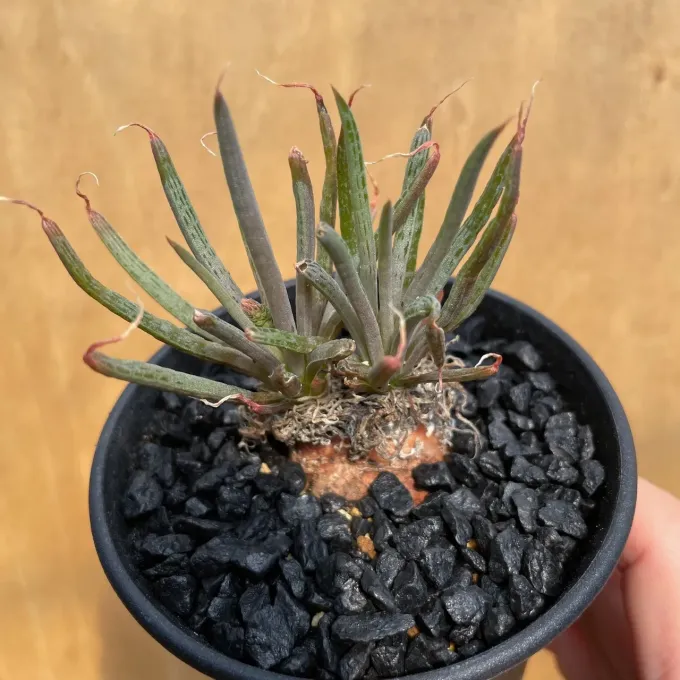
Botanically, the plant is distinguished by its succulent, fleshy leaves arranged in a tight rosette. These structures act as water reservoirs, allowing the plant to survive prolonged dry spells in its natural habitat.
When cultivating Bulbine wiesei, the priority is to replicate its native soil conditions. A highly porous, well-draining mineral substrate is essential to prevent water stagnation, which is the primary cause of root damage.
The plant requires full sun exposure to maintain its compact growth habit and natural coloration. In insufficient light, the plant will become etiolated, losing its morphological integrity and becoming susceptible to various disorders.
Climate requirements involve warm days and cooler nights, mimicking the diurnal temperature fluctuations of the South African veld. During the winter dormancy period, watering should be strictly limited to prevent root rot.
Main diseases and pests
The most significant threat to Bulbine wiesei is fungal infection resulting from improper irrigation. Overwatering creates a stagnant environment that encourages pathogens to attack the root system and the base of the leaves.
Mealybugs are the most common insect pests, often sheltering deep within the center of the leaf rosette. These pests sap the plant's vitality and create entry points for secondary bacterial or fungal infections.
Spider mites can also present a challenge, particularly in indoor environments with low humidity. They manifest as fine webbing and localized discoloration on the surface of the fleshy leaves.
Effective management of these threats relies on rigorous hygiene. Removing dead leaves and debris from the base of the plant prevents the buildup of moisture and organic matter that could attract pests and diseases.
Integrated pest management strategies should favor biological controls or contact insecticides, provided they are applied with caution to avoid burning the sensitive, wax-covered foliage of the plant.