
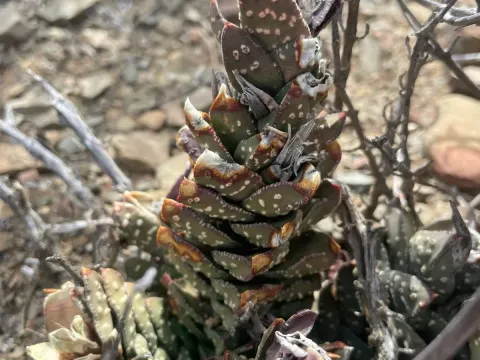
Astroloba
Astroloba Uitewaal
Astroloba is a genus of succulent plants belonging to the Asphodelaceae family. Externally, members of this genus resemble Haworthia, but they differ in floral structure and growth habit, typically forming perennial, columnar stems rather than basal rosettes.
What the section contains

Astroloba
The native habitat of this plant is the arid regions of Southern Africa, particularly the Cape Province. In their natural environment, these plants grow in stony soils, often sheltered by other shrubs, which dictates their adaptation to bright, filtered sunlight.
Successful cultivation requires a well-draining substrate consisting of a mix of sand, fine gravel, and loam. It is critical to avoid water stagnation in the root zone, as the plant is highly susceptible to overwatering, which quickly leads to root rot.
The plant prefers moderate temperatures, with an optimal summer range between 20 to 25 degrees Celsius. During the winter dormancy period, the plant should be kept in a dry, cool location with temperatures around 10 to 12 degrees Celsius.
The economic use of Astroloba is limited to ornamental horticulture. It is highly valued by plant enthusiasts as a rare and exotic specimen, making it an excellent choice for xeriscaping displays or succulent miniature garden arrangements.
Fungal diseases caused by excessive soil moisture or poor root aeration pose the primary threat to Astroloba. The development of root rot is often irreversible and destructive to the fleshy columnar stems.
Common pests include mealybugs and spider mites, which typically infest the plant in environments with low humidity. Effective management involves the use of systemic insecticides and acaricides, as well as periodic wiping of the leaves with mild alcohol-based solutions.