
Bulbine haworthioides
Bulbine haworthioides
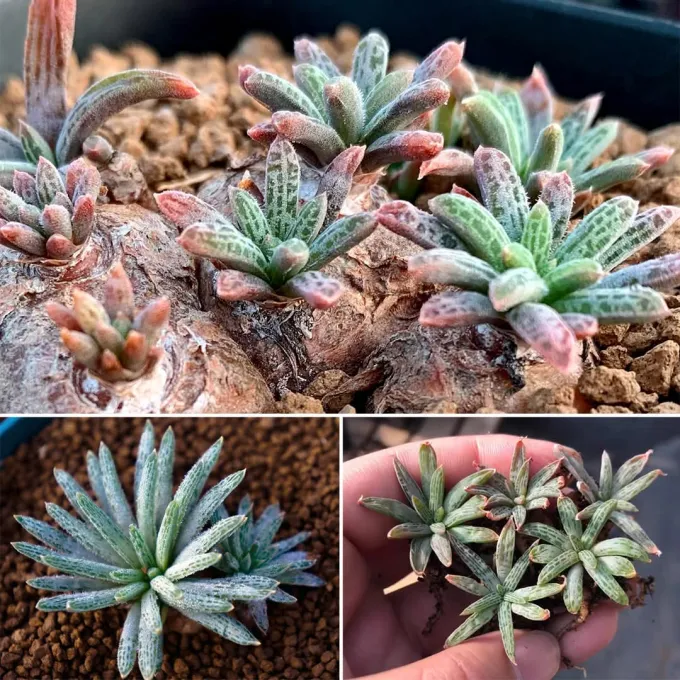
Description
Growing requirements
Bulbine haworthioides is a distinctive succulent species belonging to the Asphodelaceae family. Native to the arid regions of South Africa, this plant has evolved to thrive in harsh, water-scarce environments, making it a true desert specialist.
The plant is defined by its compact, rosette-forming leaves that are often textured with small, soft hair-like structures. This unique morphology not only aids in water retention but also provides a distinct aesthetic appeal that is highly prized by collectors of rare succulent flora.
Successful cultivation requires a gritty, highly porous substrate. A mix consisting of mineral-based components, such as pumice, coarse sand, and perlite, is essential to ensure rapid drainage and prevent the roots from remaining damp for too long.
Light requirements for this species include bright, filtered sunshine. While it is accustomed to full sun in its natural habitat, cultivated specimens may need protection from intense midday heat. Watering should follow a strict seasonal cycle, with active growth in the spring and autumn and a dry dormancy period during the hottest or coldest months.
In terms of practical use, Bulbine haworthioides serves primarily as a decorative ornamental plant. It is widely grown in greenhouses or as a specimen plant in hobbyist collections, where its compact habit makes it an excellent candidate for small container gardening.
Main diseases and pests
The primary threat to the health of the plant is root rot, typically caused by improper watering techniques or heavy, organic-rich soil that retains too much moisture. Ensuring sufficient airflow around the plant is vital to mitigate this risk.
Mealybugs are the most persistent pest species for this plant, as they find refuge in the spaces between the thick, fleshy leaves. Monitoring for signs of white cottony webbing is necessary to prevent infestations that could weaken or kill the plant.