
Bulbine mesembryanthemoides
Bulbine mesembryanthemoides
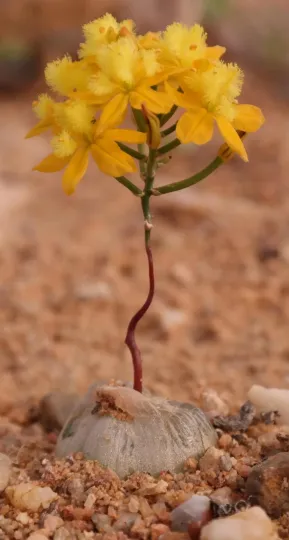
Description
Sowing dates
Sowing seeds of Bulbine mesembryanthemoides is best performed in the autumn, mimicking the plant's natural growth cycle in South Africa. Seeds should be sown on the surface of a porous, sandy substrate, as they require light to germinate effectively.
Maintaining a steady moisture level during the first few weeks is essential for germination. Once seedlings appear, the water supply must be gradually decreased to prevent the delicate young plants from damping off.
The optimal temperature for seed germination ranges between 15 and 20 degrees Celsius. Providing a well-ventilated environment is crucial to avoid fungal issues that commonly affect succulent seedlings during their early developmental stages.
Seedling growth is characteristically slow. Patience is required, and transplanting into individual small pots should only occur after the development of the first true leaves to avoid damaging the root system.
Using shallow ceramic pots is recommended for young plants, as these materials allow for better moisture evaporation and prevent the soil from staying saturated for too long.
Growing requirements
Bulbine mesembryanthemoides, a member of the Asphodelaceae family, is a small, geophytic succulent native to the arid regions of Southern Africa. Its biology is adapted to cycles of intense heat and prolonged drought periods.
The plant requires bright light to maintain its compact growth form. While it thrives in sunny locations, it should be protected from intense mid-day sun, which can cause scorching of its translucent, succulent leaves.
The soil must be extremely well-draining, consisting mainly of inorganic components like pumice, grit, and sand. Rich, heavy soils with high peat content are unsuitable and will likely cause root death.
During the summer months, the plant enters a dormant phase. During this time, all watering must be stopped to allow the subterranean caudex to rest. Resumption of watering should happen only when growth signs reappear in autumn.
In terms of cultivation, this species is highly valued by succulent enthusiasts and botanical gardens for its unique morphological features, which include specialized leaf textures that aid in moisture conservation.
Main diseases and pests
The primary threat to the health of Bulbine mesembryanthemoides is root rot caused by overwatering or poor soil drainage. When the substrate remains wet, the succulent tissues quickly succumb to anaerobic conditions.
Common pests include mealybugs and spider mites. These pests thrive in dry conditions and can hide within the crevices of the plant's leaves, making them difficult to detect until the infestation becomes severe.
Management involves the use of systemic insecticides or horticultural oils applied according to local agricultural guidelines. Always isolate affected plants to prevent the spread of pests throughout your collection.
Fungal pathogens often appear when high humidity is combined with stagnant air. Improving airflow around the plants and ensuring that the foliage stays dry are effective preventive measures.
Regular monitoring of the root zone and leaf health is the best defense. If rot is detected early, cutting away the affected tissue and allowing the plant to callous in a dry, shaded area can sometimes save it.