
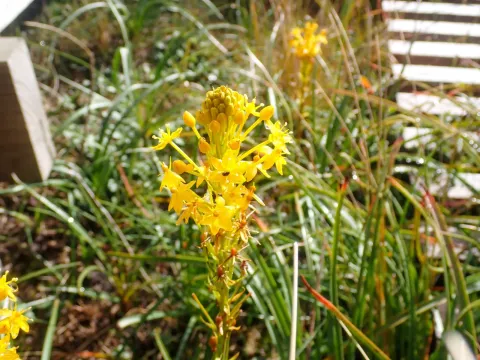
Bulbinella
Bulbinella
Bulbinella is a genus of flowering plants belonging to the Xanthorrhoeaceae family, known for its elegant spikes of small, star-shaped flowers.
What the section contains


Bulbinella
Seeds should be sown in late winter or early spring in a well-drained, sterile potting mix under controlled greenhouse conditions.
The optimal germination temperature ranges between 15 and 18 degrees Celsius, requiring constant moisture and moderate light levels.
Vegetative propagation is primarily achieved through the division of established rhizomes, which should be performed during the plant's dormant season.
Young plants grown from seed usually require careful handling and transplanting once they develop sufficient roots to withstand environmental stress.
Native to South Africa and New Zealand, these plants thrive in locations that offer full sun exposure throughout the growing season.
Soil composition is critical; the medium must be light, porous, and enriched with organic matter to ensure healthy root development and drainage.
Watering requirements vary; plants need consistent moisture while actively growing but demand a dry period during their summer dormancy.
Fertilization with a balanced, slow-release fertilizer is recommended in early spring to support the development of flower spikes and foliage.
In colder regions, it is essential to protect the rhizomes from freezing temperatures by applying a thick layer of mulch or lifting them for winter storage.
The primary concern for Bulbinella cultivation is root rot, which typically occurs due to excessive soil moisture and inadequate drainage.
Fungal infections can spread rapidly if the air circulation around the base of the plant is poor, leading to soft tissue decay.
Pests such as slugs and snails are highly attracted to the succulent-like foliage, often causing significant damage during damp weather.
Aphids can occasionally infest flower stalks, affecting the overall aesthetics and vigor of the plant during the blooming period.
- Ensure proper soil drainage to prevent fungal issues.
- Implement slug control measures during spring growth.
- Maintain proper spacing between plants to improve air ventilation.