
Bulbine alooides
Bulbine alooides
Description
Sowing dates
Sowing Bulbine alooides seeds is best accomplished during the spring months to take advantage of the natural increase in sunlight hours.
Prepare a well-draining sowing mix consisting of coarse sand, perlite, and a small amount of sterilized potting soil to ensure optimal drainage.
Spread the seeds evenly across the surface of the moist medium, pressing them lightly into the substrate without covering them too deeply.
Maintain a constant temperature between 20°C and 22°C and use a humidity cover to facilitate a stable environment during the germination phase.
Prick out the seedlings once they develop their first set of true leaves, ensuring they are transplanted carefully into individual small pots.
Growing requirements
Bulbine alooides belongs to the Asphodelaceae family and is a succulent plant native to the arid and semi-arid regions of South Africa.
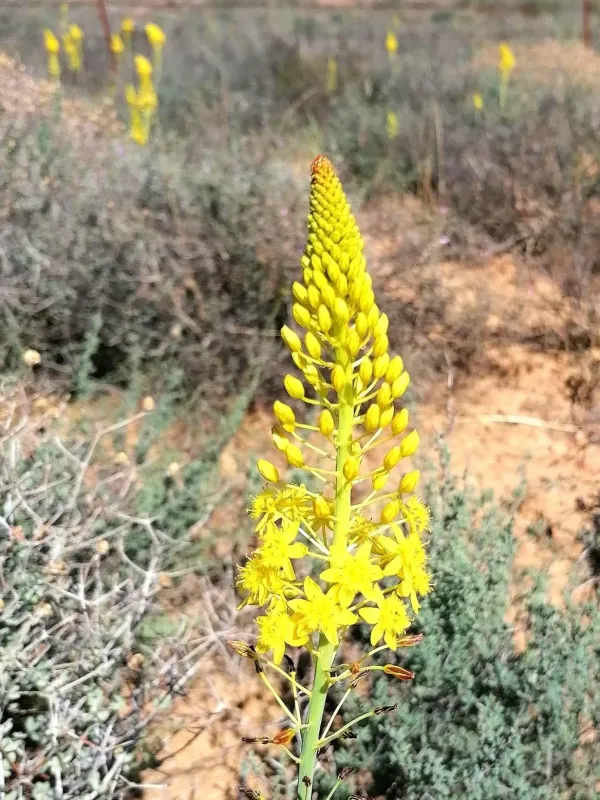
This species is characterized by its succulent, aloe-like leaves and yellow or orange flowers arranged in dense, terminal racemes on flowering stalks.
The plant thrives in full sun, which is essential to maintain its compact growth form and prevent etiolation of the succulent foliage.
Soil quality must be lean and sandy, providing excellent drainage to avoid water stagnation, which can cause physiological disorders or root rot.
Irrigation should be strictly controlled, allowing the substrate to dry out completely between watering sessions to mimic the plant's natural habitat.
Main diseases and pests
Fungal pathogens associated with damp environments are the primary threat, often resulting in crown rot if the plant is kept in waterlogged conditions.
Common pests include mealybugs and spider mites, which can proliferate rapidly if the air surrounding the plant is too dry and lacks circulation.
Mealybugs usually concentrate in the tight spaces between leaf bases, making them difficult to detect until they have caused significant damage.
Pest management should focus on early detection and the use of targeted insecticide treatments compatible with the waxy cuticle of the leaves.
Keeping the plant in an area with good air movement significantly reduces the risk of infestation and prevents the development of secondary infections.