
Bulbine latifolia
Bulbine latifolia
Description
Growing requirements
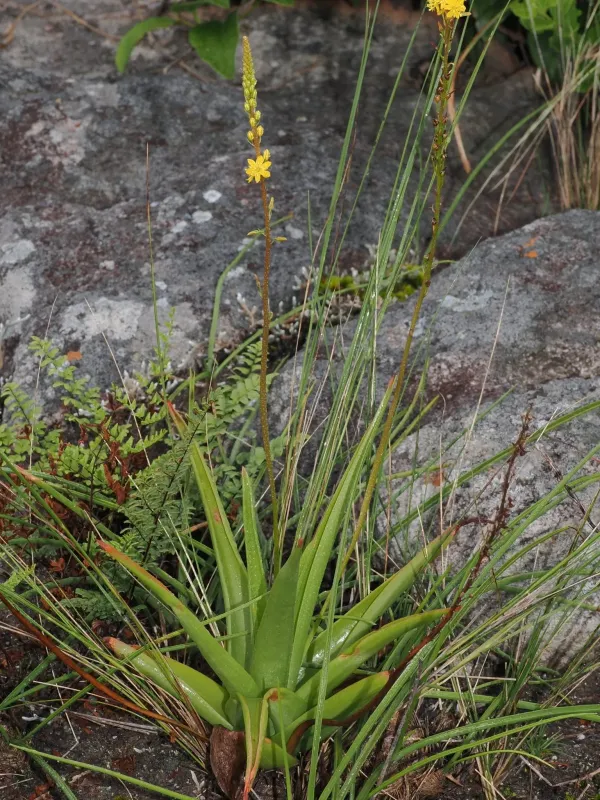
Bulbine latifolia is a perennial succulent plant belonging to the Xanthorrhoeaceae family, native to the diverse landscapes of Southern Africa. It is characterized by its rosettes of fleshy, sword-shaped leaves that act as water reservoirs, enabling the plant to thrive in arid conditions.
Botanically, this species is well-adapted to environments with intermittent rainfall. It features a robust root system capable of moisture storage and produces tall, slender racemes adorned with small yellow or orange flowers during the active growing season, adding to its visual appeal.
For optimal growth, Bulbine latifolia requires abundant bright, indirect sunlight. While it can tolerate direct sun in its natural habitat, domestic cultivation necessitates careful management to prevent leaf scorching. Temperatures should be kept moderate, avoiding extreme fluctuations.
Soil composition is critical for this species; it requires a highly porous, gritty medium to prevent waterlogging. A blend of coarse sand, perlite, and a small amount of potting compost is ideal. Drainage must be efficient, as standing water is the primary cause of plant failure.
The economic and practical utility of Bulbine latifolia is significant, particularly in traditional medicine. The gel extracted from its succulent leaves is recognized for its soothing, antiseptic, and anti-inflammatory properties, making it a valuable resource for treating skin abrasions and minor injuries.
Main diseases and pests
Overwatering remains the most critical threat to the health of Bulbine latifolia. Excessive moisture trapped in the soil leads to rapid rot of the crown and root system, which is often difficult to reverse once symptoms such as mushy leaves become apparent.
Common horticultural pests include mealybugs, which tend to congregate in the tight spaces of the leaf rosettes, and spider mites that thrive in low-humidity environments. These pests can weaken the plant by draining sap and creating entry points for secondary infections.
To mitigate pest infestations, regular monitoring of the foliage is essential. If pests are detected, targeted application of neem oil or insecticidal soap is recommended. Maintaining good air circulation is a key strategy for keeping the plant robust and pest-free.
Fungal pathogens can occasionally affect the plant if stagnant water accumulates within the leaf bases or if the environment is too humid. Improving airflow and practicing careful, bottom-up watering techniques significantly reduces the incidence of fungal growth.
Balanced fertilization during the active growing season supports the plant's natural defenses. It is vital to use fertilizers sparingly, as excessive nitrogen can lead to soft, succulent tissue that is more susceptible to both mechanical damage and pest attacks.