
Cornelian cherry
Cornus mas L.
The Cornelian cherry (Cornus mas L.) is a deciduous fruit-bearing shrub or small tree belonging to the Cornaceae family, known for its longevity and resilience.
What the section contains
Cornelian cherry
Native to Central and Southern Europe as well as Western Asia, this plant thrives in temperate climates and is highly regarded for its ability to withstand cold winters.
For optimal growth, Cornelian cherry prefers well-drained, fertile soils with a neutral to slightly alkaline pH. It is generally adaptable but performs best in sunny locations.
Although it is notably drought-tolerant once established, providing supplemental irrigation during dry spells will significantly improve both vegetative growth and fruit quality.
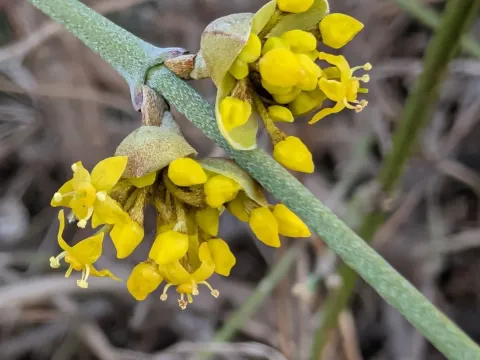
One of its most distinctive biological features is the early flowering period, where bright yellow flowers appear in late winter or early spring before the leaves emerge.
A mature Cornelian cherry tree, typically between 15 to 20 years old, can produce a significant harvest ranging from 30 to 50 kilograms of fruit per season.
The fruits are rich in Vitamin C, antioxidants, and organic acids, making them a popular choice for healthy nutrition and high-quality preserves.
In terms of agricultural utility, the berries are widely used in food processing to create jams, juices, syrups, and traditional fermented beverages.
The wood of this tree is famous for its exceptional density and hardness, historically used for crafting precision tools, weapon parts, and various household objects.
Furthermore, the Cornelian cherry is increasingly utilized in modern landscape design for its multi-seasonal ornamental appeal and low maintenance requirements.
Cornelian cherry is generally considered a disease-resistant crop, though poor air circulation in the canopy can occasionally lead to issues with powdery mildew.
Fungal leaf spot diseases may develop if the orchard is kept in high-humidity conditions without proper annual pruning to thin the foliage.
Insect pests are rarely a major problem, though the Cornelian cherry fruit fly can impact yield by damaging the developing berries during the growing season.
Implementing basic preventive measures, such as removing fallen fruit and maintaining a clean orchard floor, is sufficient to keep most pest populations under control.
Regular monitoring of bark health and pruning out damaged branches help maintain the overall vigor of the tree and prevent the spread of wood-rotting pathogens.
Harvesting usually takes place between late August and early October, as the berries shift from a bright red to a deep, translucent dark ruby color.
The fruit does not ripen all at once, so gardeners often perform multiple pickings to ensure that every berry is harvested at its peak sugar concentration.
When handling the fruit, care must be taken to avoid bruising the delicate skin, especially if the berries are destined for fresh market sales or storage.
Using a tarp spread beneath the tree to catch falling ripe berries is a common, labor-saving technique widely used in commercial and home orchards.
Post-harvest, the fruit should be handled gently and kept in a cool, ventilated area to maximize shelf life, as fresh berries are highly perishable at room temperature.