
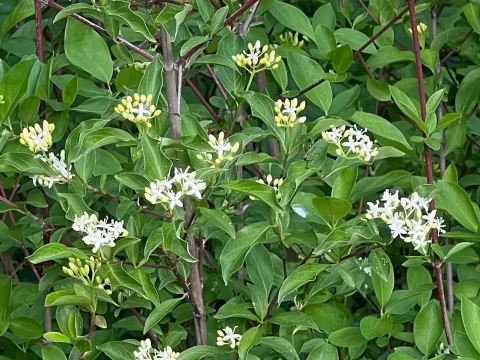
Cornus glabrata
Cornus glabrata
Cornus glabrata, commonly known as the smooth dogwood, is a deciduous shrub belonging to the Cornaceae family. It is native to North America, specifically found in regions of California, where it typically thrives in moist environments.
What the section contains
Cornus glabrata
This species is characterized by moderate growth and the tendency to form thickets. The plant is named for its smooth bark on younger stems. The leaves are opposite, simple, with distinct venation, and undergo a transition in color during the autumn season.
The species has moderate climatic requirements, preferring areas with adequate soil moisture. While it adapts well to partial shade, it also thrives in full sun, provided the irrigation schedule is consistent to prevent drought stress.
It is relatively flexible regarding soil conditions, though it performs best in fertile, well-drained loam. The ideal pH level for successful cultivation ranges from slightly acidic to neutral, ensuring optimal nutrient availability for the plant.
Agricultural management requires attention to soil moisture in the years following establishment. The shrub responds well to the application of organic amendments and necessitates periodic sanitary pruning to maintain a desirable aesthetic shape.
The primary use of Cornus glabrata is within ornamental gardening and landscape design. It is frequently employed for creating hedges, stabilizing stream banks, and mitigating soil erosion due to its extensive and robust root system.
The ecological value of this plant includes its role in supporting local biodiversity by attracting birds and beneficial insects. While the fruits are not typically harvested for human consumption, they provide an essential food source for local wildlife.
Harvesting for propagation purposes involves collecting stem cuttings during summer or autumn months. Seed propagation requires a period of cold stratification to ensure a high germination rate within nursery environments.
Timber utilization is limited due to the shrub's natural size; however, flexible branches are occasionally utilized for artisanal weaving or small-scale decorative structures. The agricultural utility remains centered on environmental and recreational land management.
Annual rejuvenation pruning is practiced to ensure the longevity of the plant's decorative appeal. This practice helps maintain a dense foliage structure and encourages vigorous new growth, maximizing the plant's contribution to green spaces.
Cornus glabrata is recognized for its relative resilience against many diseases common to other dogwood species. However, improper agricultural management may lead to fungal issues if the root zone is chronically waterlogged.
Insect pests such as aphids or leaf-feeding caterpillars may pose a threat in specific seasons. Integrated pest management, including preventive insecticide applications in early spring, is effective at controlling potential infestations.
Powdery mildew may occur in overcrowded plantings where air circulation is restricted. Preventive measures include proper spacing, regular thinning of the canopy, and avoiding overhead irrigation during peak heat hours of the day.
Root rot is the most significant threat when the plant is grown in heavy, poorly drained clay soils. Symptoms such as wilting and premature leaf chlorosis signal the need for immediate adjustments to the drainage or watering practices.
Regular monitoring of the plant's health is essential throughout the growing season. Early detection of any pathological signs prevents mass spread, ensuring the long-term success and vigor of the ornamental shrub population.