
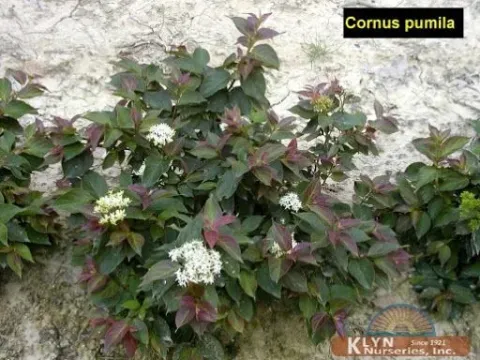
Dwarf Dogwood
Cornus pumila
Dwarf Dogwood, classified under the botanical name Cornus pumila, belongs to the Cornaceae family and is highly valued for its low-growing habit and exceptional hardiness in various landscapes.
What the section contains
Dwarf Dogwood
The plant thrives in fertile, well-drained loamy soils that maintain consistent moisture levels. It is adaptable to a variety of pH ranges, although slightly acidic to neutral soils typically promote the most vigorous growth.
In terms of climate, it performs well in temperate zones, showing significant resistance to cold temperatures. It is capable of growing in full sun or partial shade, making it a versatile choice for different garden zones.
Cultural practices include consistent watering, particularly during the first few years of establishment, to ensure the root system is well-developed. Adding organic matter to the soil during planting can significantly improve the nutrient profile.
Regular maintenance involves pruning to remove dead or diseased branches and to shape the shrub according to its desired size. This practice not only keeps the plant looking tidy but also encourages new, healthy growth during the following season.
The main threats to Cornus pumila include common fungal pathogens like powdery mildew, which can appear if there is poor air circulation and excessive humidity around the foliage.
Pests such as aphids and spider mites can occasionally affect the plant, particularly in hot and dry weather conditions. Monitoring for signs of leaf yellowing or curling is essential for early detection.
Effective management requires a combination of cultural practices, such as proper spacing during planting, and chemical control when necessary using approved pesticides for ornamental shrubs.
Maintaining a clean garden environment by removing fallen leaves and debris helps in reducing the overwintering sites for both fungal spores and insect pests.
- Application of dormant oils to manage overwintering insect eggs.
- Sanitary pruning to improve ventilation within the shrub structure.
- Monitoring soil moisture to prevent root-related issues and stress.